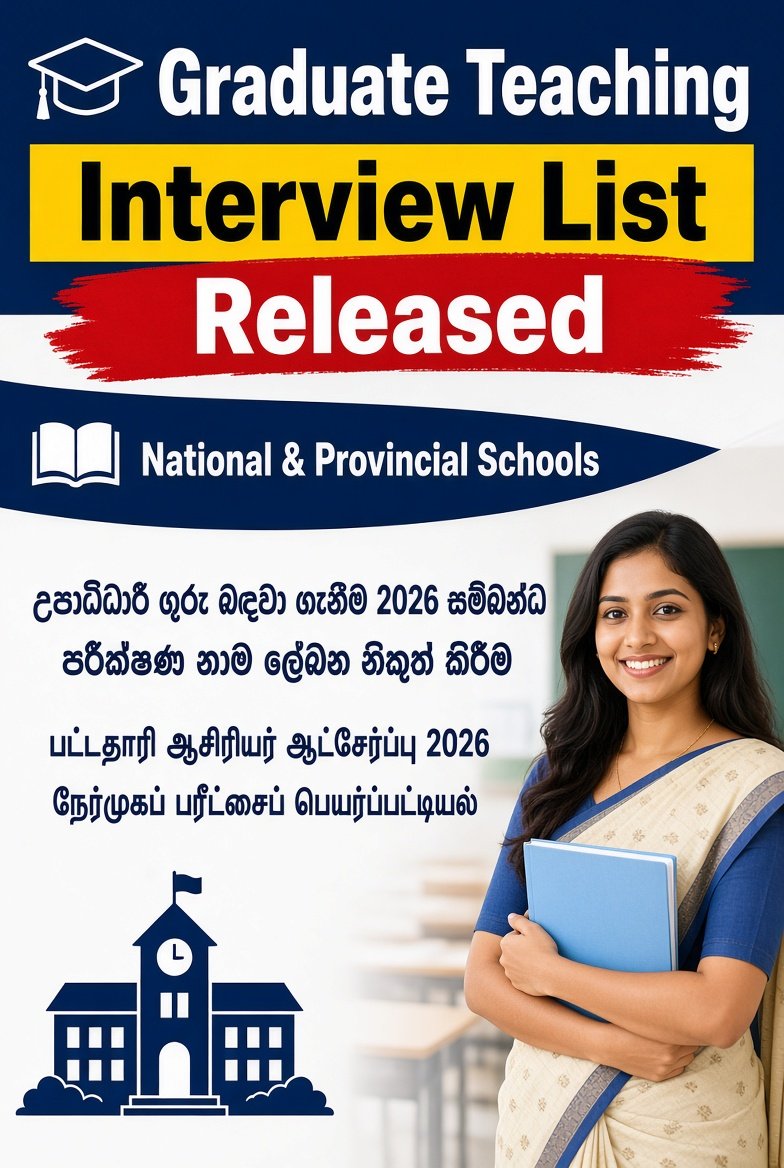
Proven Graduate Recruitment for Sri Lanka Teachers’ Service 2026

visit srilankan.com

Graduate Teacher Recruitment 2026 – Full Provincial Interview Candidate Lists

The Ministry of Education, Sri Lanka, has provided province-wise links for the Graduate Teacher Recruitment Interview 2026. Candidates can visit the relevant provincial pages below to check the available interview candidate lists and related announcements.

Province-Wise Interview Candidate Lists

  1. Central Province – View Candidate List
  2. Eastern Province – View Candidate List
  3. North Central Province – View Candidate List
  4. Northern Province – View Candidate List
  5. North Western Province – View Candidate List
  6. Sabaragamuwa Province – View Candidate List
  7. Southern Province – View Candidate List
  8. Uva Province – View Candidate List
  9. Western Province – View Candidate List

Important Notice for Candidates

  • Select your relevant province from the list above.
  • Check the official Ministry of Education website for interview notices, candidate lists, dates, and further instructions.
  • Read the official announcements carefully and follow the instructions provided by the relevant authorities.
  • The lists and interview details may be updated. Please check the official website regularly for the latest information.

Official Website: Ministry of Education, Sri Lanka

SRI LANKA GRADUATE TEACHER RECRUITMENT 2026

The Ministry of Education, Higher Education and Vocational Education of Sri Lanka has announced the recruitment of graduates to the Sri Lanka Teachers’ Service in 2026 as part of the SRI LANKA GRADUATE TEACHER RECRUITMENT 2026 initiative to fill teacher vacancies in response to rising demand across the education system.

Vacancies cover Sinhala, Tamil and English mediums, and apply to both national and provincial schools, ensuring equal access nationwide. The program aims to attract graduates with diverse backgrounds who are prepared to teach core subjects and support student achievement across multiple regions.

The recruitment process is guided by Government Gazette notifications. In this system, a degree alone does not guarantee a teaching appointment. Applicants must meet prescribed educational and other eligibility requirements and complete selection stages for SRI LANKA GRADUATE TEACHER RECRUITMENT 2026.

According to the Gazette dated 2 February 2026, the recruitment process for graduates who are not currently employed in the public service includes a written competitive examination, a general interview and a practical test. Final selection depends on the applicable rules, available vacancies and the marks obtained at the relevant stages.

1. Who is conducting the recruitment?

The recruitment is conducted under the Ministry of Education, Higher Education and Vocational Education.

Additionally, the examination is administered by the Department of Examinations, with procedures for SRI LANKA GRADUATE TEACHER RECRUITMENT 2026.

The appointments are intended to fill specified vacancies in:

  • National schools.
  • Provincial schools.
  • Sinhala-medium teaching posts.
  • Tamil-medium teaching posts.
  • English-medium teaching posts.

Recruitment is carried out only for the subjects and vacancies specified in the relevant Gazette.

2. What are the stages of selection?

For the open recruitment category covered by Gazette No. 2474/19, the selection process consists of the following main stages.

Stage 1: Written competitive examination

Eligible applicants must sit the written competitive examination conducted by the Commissioner General of Examinations.

Candidates must obtain at least 40 marks for each question paper to qualify for consideration for the general interview.

Meeting the minimum marks requirement does not automatically guarantee an interview. Candidates are considered according to their total examination marks and the number of vacancies available.

Stage 2: General interview

Candidates are shortlisted for the general interview according to their written examination merit order.

The Gazette states that up to twice the number of existing vacancies will be called for the general interview from candidates who meet the minimum marks requirement for each paper.

For example, if 100 vacancies are available in a particular recruitment category, the relevant authorities may call up to 200 eligible candidates for the general interview, subject to the Gazette’s selection rules.

During the interview, the authorities verify whether candidates meet the prescribed eligibility requirements. Applicants who do not fulfil the required qualifications may be rejected.

Candidates should therefore prepare their original certificates and supporting documents, including their degree certificates, academic transcripts and other documents required by the interview notice.

Stage 3: Practical test

Candidates who qualify at the general interview must face the practical test prescribed by the recruitment notification.

The marks obtained at this stage are forwarded to the Department of Examinations by the Ministry of Education or the relevant Provincial Public Service Commission.

The practical test is an important stage because recruitment is made according to the marks obtained in this test, subject to the applicable eligibility and vacancy rules.

Applicants should carefully read the instructions issued for their subject and prepare according to the relevant practical-test requirements. The exact assessment arrangements should be confirmed through official instructions rather than assumed to be identical for every subject.

Stage 4: Selection according to practical-test marks

According to the Gazette, recruitment is conducted on a school-based system.

Candidates are selected according to the priority order of marks obtained in the practical test, taking into account:

  • The subject applied for.
  • The language medium.
  • The type of school.
  • The number of available vacancies.
  • The applicable school-placement and eligibility rules.

Therefore, candidates should not assume that passing the written examination or attending the interview means they will automatically receive an appointment.

Stage 5: School preference and placement

The relevant vacancy list is displayed to applicants at the time of the practical test. Candidates must indicate their preferences among the schools with vacancies.

However, obtaining a preferred school is not guaranteed. Placement depends on the applicable selection rules, marks and vacancies.

Where candidates seeking the same school receive equal marks, the relevant Ministry Secretary or Provincial Public Service Commission determines the placement in accordance with the Gazette.

3. Educational qualifications

Applicants must satisfy the educational requirements stated in the applicable Gazette and the Sri Lanka Teachers’ Service Minute.

For the open recruitment category in Gazette No. 2474/19, the main requirements include:

  • A degree from a university recognised by the University Grants Commission or a recognised degree-awarding institution.
  • Completion of the required subject content relevant to the teaching subject applied for.
  • Compliance with the specific degree and subject requirements listed in the Gazette.
  • Having passed Sinhala or Tamil as a subject at the G.C.E. Ordinary Level examination, or an examination recognised as equivalent under the notification.

The Gazette specifies that the degree qualifications and relevant conditions must have been fulfilled by 30 June 2025 for this recruitment category.

Why is the degree subject important?

Applicants cannot necessarily select any teaching subject simply because they hold a bachelor’s degree.

The authorities examine the main subject or subjects studied and the relevant credit content of the degree. In the applicable notification, at least one-third of the total subject content must relate to the subject applied for, subject to the specific qualification requirements for that subject.

Where the transcript does not show the relevant subject content or credit details, additional verification from the university may be required.

Candidates should consult the subject-qualification schedule in the Gazette before deciding which teaching post to apply for.

4. Which subjects are covered?

The Gazette includes a range of teaching subjects, depending on the prescribed qualifications and vacancies.

Examples include:

  • Chemistry, Physics and Biology.
  • Mathematics and related subjects.
  • Engineering Technology and Information and Communication Technology.
  • Accounting, Business Studies and Economics.
  • Geography, History and Political Science.
  • Sinhala, Tamil and English.
  • Arabic and other foreign languages.
  • Religious and civilisation-related subjects.
  • Art, music, dancing and performing arts.
  • Physical Education and Sport.
  • Other subjects specified in the official vacancy schedule.

This is an indicative list, not confirmation that vacancies exist in every subject or language medium. The official Gazette’s subject and vacancy schedules must be checked before drawing conclusions about available posts.

5. National schools and provincial schools

Candidates can apply for national schools, provincial schools, or both, as permitted by the relevant notification.

For the open recruitment category, the Gazette sets out separate recruitment arrangements for national and provincial schools.

Applicants selecting provincial schools are considered according to the permanent-residence rules stated in the notification. For this particular Gazette, the province recorded in the 2025 electoral register is used to determine permanent residence.

Applicants may also indicate an additional province under the conditions specified in the Gazette. Consideration for that province depends on the absence of relevant vacancies in the applicable category and the availability of vacancies after eligible permanent residents have been considered.

There is also a specific restriction for applicants who are not permanent residents of the Eastern Province: the Gazette limits their applications for Eastern Province posts to subjects including Science, Mathematics, English, Information Technology, the Technology Stream and Counselling.

Candidates should read these provisions carefully before choosing their school category or province.

6. Can a selected teacher request a transfer?

The open recruitment Gazette provides that candidates recruited under this school-based system will not be granted transfers under any circumstances until they complete five years.

This is an important condition for applicants who hope to work near their home or in a particular district.

Before accepting an appointment, candidates should understand the school-based placement rules and consider whether they can serve at the assigned school for the required period.

7. Salary and service conditions

The Gazette specifies the applicable salary scale under the relevant government salary provisions.

For the open recruitment category covered by Gazette No. 2474/19, the stated scale is:

Rs. 53,060 – Rs. 66,600 per month, with the appointment placed at the specified salary step of Rs. 64,440 for the relevant Grade I(a) entry arrangement under Class 3 of the Sri Lanka Teachers’ Service.

Other government allowances may be payable in accordance with the applicable rules.

The Gazette also states that:

  • The post is permanent and pensionable.
  • Appointees are subject to a three-year probation period.
  • The first Efficiency Bar Examination must be passed within the specified three-year period.
  • Official-language proficiency requirements apply.
  • Appointments are subject to the Sri Lanka Teachers’ Service Minute and other applicable public-service rules.

The figures and conditions above relate to the specific open recruitment notification. Applicants should check the applicable Gazette and subsequent official instructions before relying on them for an appointment.

8. What documents should candidates prepare?

Applicants should follow the exact checklist in their interview and practical-test notices. Depending on the applicable requirements, they may need:

  • National Identity Card or other accepted identification.
  • Printed application form.
  • Degree certificate.
  • Official academic transcript.
  • Documents verifying subject content or credits, if required.
  • G.C.E. Ordinary Level and other relevant examination certificates.
  • Birth certificate or other personal records, if requested.
  • Documents supporting eligibility under any special provision.
  • Any other original or certified documents specified in the official notice.

For the open recruitment category, the Gazette instructs applicants to download the submitted application, have their signature attested by a Justice of the Peace and produce it at the interview.

Candidates should not rely solely on photocopies if originals are requested. The interview notice takes precedence regarding the documents to bring.

9. How can candidates check the results and interview lists?

Candidates should use the official websites of the relevant authorities to check announcements, interview lists, practical-test instructions and appointment information.

Official websites:

The Ministry’s website is particularly important because the Gazette specifies that the list of candidates eligible for the general interview will be published there.

Candidates should check the official announcements regularly and verify their examination details carefully. They should not treat an unofficial social-media post or forwarded message as confirmation of selection.

10. Important points candidates must remember

  1. Passing the written examination does not guarantee an appointment.
  2. Candidates must obtain the prescribed minimum marks for each question paper.
  3. The general interview includes verification of eligibility.
  4. Candidates who qualify for the practical test are assessed according to the applicable arrangements.
  5. Final recruitment depends on practical-test merit, relevant vacancies and the official selection rules.
  6. School and province preferences do not guarantee placement at a preferred location.
  7. The five-year transfer restriction applies to the school-based recruitment covered by the open Gazette.
  8. Applicants must follow the instructions in the specific Gazette under which they applied.
  9. Candidates should check the Ministry of Education website for official interview and result announcements.

Frequently Asked Questions

1. Is a written examination required for graduate teacher recruitment in 2026?

Yes. For the open recruitment category covered by Gazette No. 2474/19, a written competitive examination is required.

2. What is the minimum mark required to qualify for the interview?

Candidates must obtain at least 40 marks for each question paper. The number called for the general interview is determined according to the merit order and the relevant vacancies.

3. Will everyone who passes the examination receive an interview?

No. Candidates must meet the minimum marks requirement and be within the number shortlisted according to the merit order and available vacancies.

4. Is the general interview the final selection stage?

No. Candidates who qualify at the general interview must also complete the prescribed practical test. Recruitment is based on the applicable selection rules and practical-test merit.

5. Can applicants choose their preferred school?

Candidates can indicate preferences from the vacancy list made available at the practical test. Final placement is subject to merit, vacancies and the applicable rules.

6. Can a newly appointed teacher transfer to another school immediately?

Under the open recruitment Gazette, transfers are not permitted until completion of five years under the specified school-based system.

7. Where can applicants check the interview list?

Candidates should check the official Ministry of Education website at https://moe.gov.lk/ and follow announcements relevant to their recruitment category.

8. Are the application dates still open?

The application period stated in Gazette No. 2474/19 was from 20 February 2026 at 9.00 a.m. until 5 March 2026 at 9.00 p.m. That application window has closed. Candidates should check the Ministry’s website for subsequent interview, examination-result or appointment announcements.

Conclusion

The 2026 recruitment of graduates to the Sri Lanka Teachers’ Service follows a structured selection process intended to fill specified teaching vacancies in national and provincial schools.

For the open recruitment category, the process includes a written competitive examination, a general interview and a practical test, followed by school-based selection according to practical-test merit and the applicable vacancy rules.

Graduates who applied should regularly check official announcements, prepare the required documents and carefully follow the instructions issued by the Ministry of Education and the relevant authorities. The applicable Gazette remains the primary reference for eligibility, selection and appointment conditions.

Official reference: Gazette Extraordinary No. 2474/19, dated 2 February 2026, Competitive Examination for the Recruitment of Graduates to the Sri Lanka Teachers’ Service for Sinhala, Tamil and English Medium Teacher Vacancies in National and Provincial Schools of the Island – 2026.
visitsrilankan.com

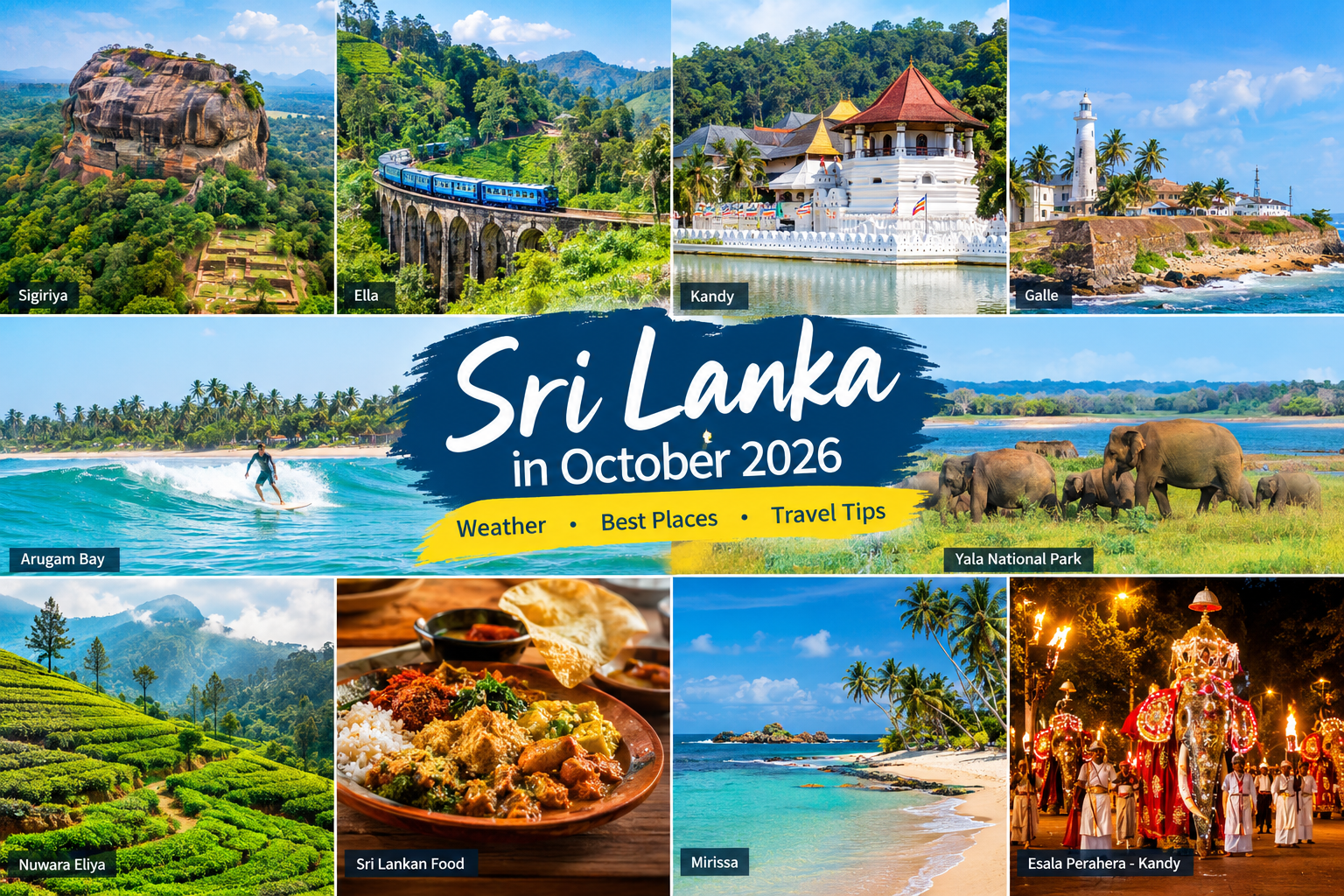
Sri Lanka in October 2026: Weather, Best Places to Visit and Essential Travel Tips

Planning a holiday to Sri Lanka in October 2026 can be rewarding.

Discover the island’s beaches, misty mountains, ancient cities, wildlife parks and cultural attractions.

October is a transition month between monsoon seasons, while rainfall varies by region.

Plan your itinerary around the weather to make the most of the trip.

From the golden beaches of the east coast to the green tea plantations of the hill country, Sri Lanka offers a remarkable variety of experiences. Whether you are travelling as a couple, with family or on a solo adventure, this guide will help you plan a more enjoyable and informed journey.

Is October a Good Time to Visit Sri Lanka?

October can be a rewarding month to visit Sri Lanka, particularly for travellers who are flexible with their plans. The island has a tropical climate, and weather conditions can change considerably between coastal areas, the central highlands and the dry zone.

October falls within the second inter-monsoon period, when showers and thunderstorms can occur across many parts of the island. Some days may offer sunshine and clear skies, while others may bring prolonged rain.

The best approach is to choose destinations according to current weather conditions rather than relying on a fixed seasonal itinerary.

Moreover, why consider visiting Sri Lanka in October 2026?

  • Explore Sri Lanka’s ancient heritage and cultural landmarks.
  • Enjoy scenic drives through tea-growing regions when conditions permit.
  • Discover wildlife and nature experiences with appropriate local guidance.
  • Experience Sri Lankan food, village life and cultural traditions.
  • Build a flexible itinerary that can be adjusted according to the forecast.

Important weather update: Sri Lanka’s Department of Meteorology forecast showers or thundershowers in most parts of the island for 13 October 2026. Heavy rainfall of around 100–150 mm was possible in some locations in the Central, Sabaragamuwa, Uva and Southern provinces. Travellers should check the latest official forecast before setting out. Conditions may change after this forecast was issued.
Best Places to Visit in Sri Lanka in October

1. Ella – Mountains, Tea Plantations and Scenic Views

Ella is one of Sri Lanka’s best-known hill-country destinations, attracting visitors with its green landscapes, tea plantations and spectacular mountain scenery.

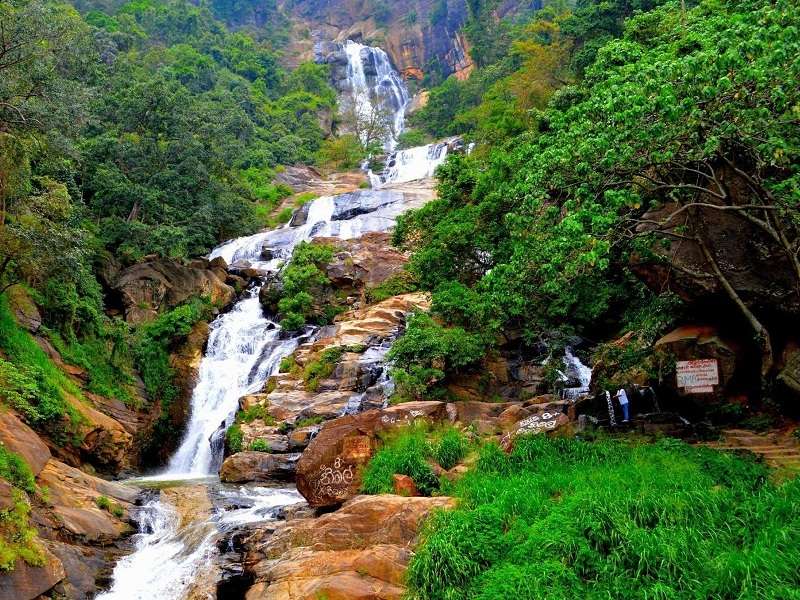
Popular attractions include Nine Arch Bridge, Little Adam’s Peak and Ravana Falls. On clear days, visitors can enjoy impressive views across the surrounding hills.

October’s mist and rainfall can create beautiful scenery, but heavy rain may make hiking trails slippery and affect road travel. Check local conditions before planning walks or visiting waterfalls.

Best for: Nature lovers, couples, photographers and mountain enthusiasts.

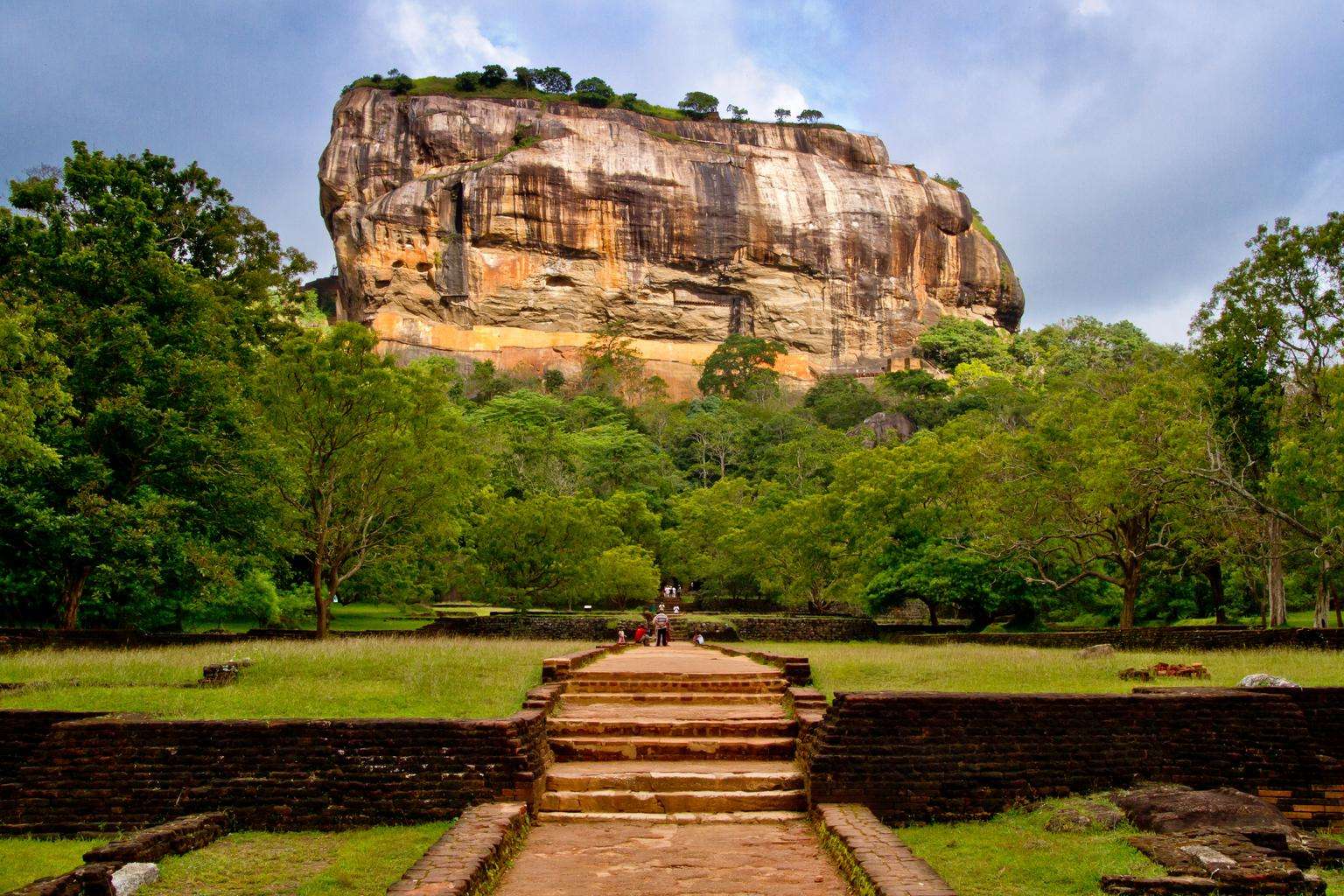
2. Sigiriya – Ancient History and Iconic Landscapes

Sigiriya is one of Sri Lanka’s most famous cultural landmarks. Its enormous rock fortress rises above the surrounding plains and is celebrated for its ancient engineering, landscaped gardens and historic frescoes.

Visitors can explore the archaeological site, learn about Sri Lanka’s royal history and discover nearby rural communities.

For a more comfortable experience, start early in the morning and carry drinking water. If thunderstorms are forecast, follow site-management instructions and postpone climbing when necessary.

Best for: History lovers, families, photographers and cultural travellers.

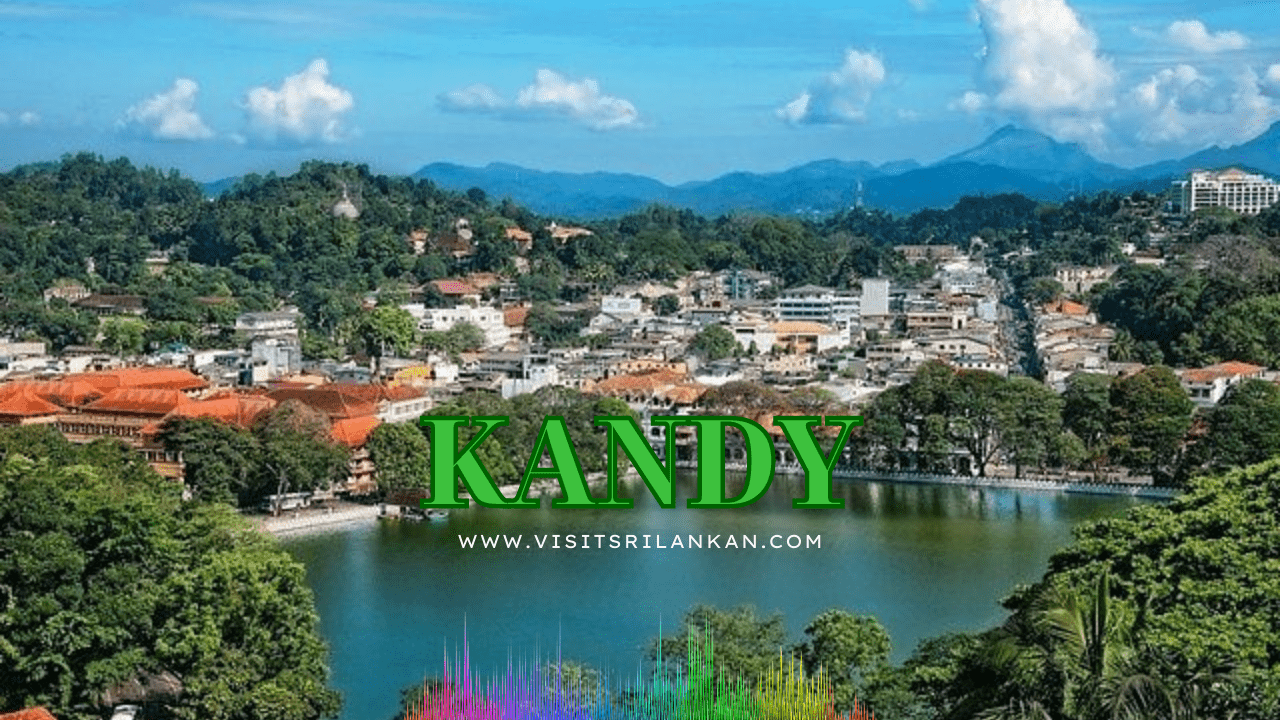
3. Kandy – Culture, Heritage and Hill-Country Charm

Kandy offers a combination of religious heritage, traditional culture and attractive mountain scenery. The Temple of the Sacred Tooth Relic is an important Buddhist pilgrimage site, while Kandy Lake provides a pleasant setting for a walk when conditions are suitable.

Visitors can also explore local markets, handicraft shops and traditional Sri Lankan cuisine.

Rain may affect outdoor sightseeing, so keep some indoor activities available as alternatives.

Best for: Cultural tourism, families and visitors interested in Sri Lankan traditions.

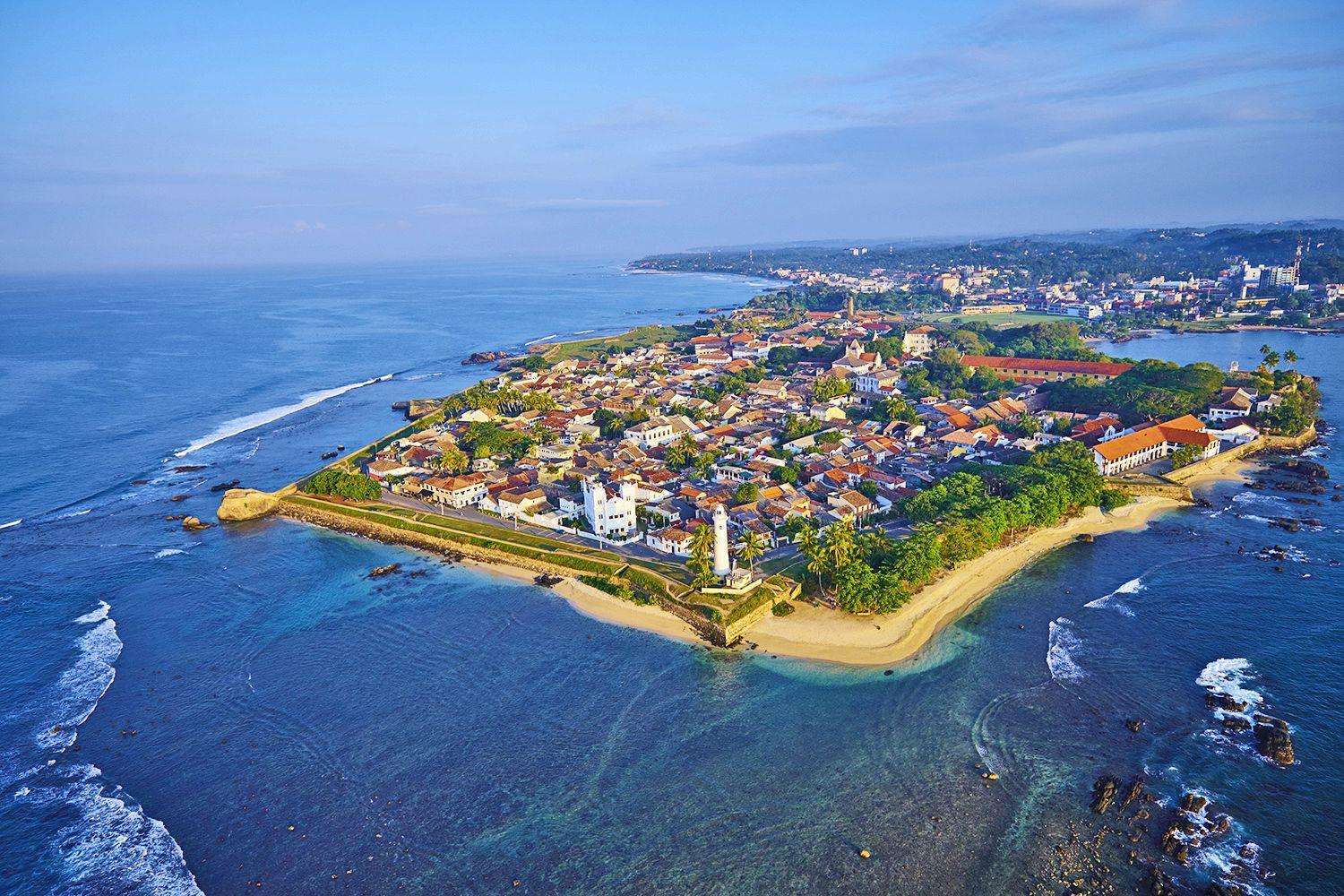
4. Galle – Colonial Architecture and Coastal Experiences

Galle Fort is a historic coastal destination known for its colonial-era buildings, narrow streets, cafés, boutiques and sea-facing ramparts.

Visitors can spend time exploring the fort, learning about its maritime history and enjoying the local food scene.

October weather along the southern coast can be changeable. Check sea conditions before swimming, surfing or booking boat trips, and avoid entering rough water.

Best for: Couples, history enthusiasts, architecture lovers and relaxed sightseeing.

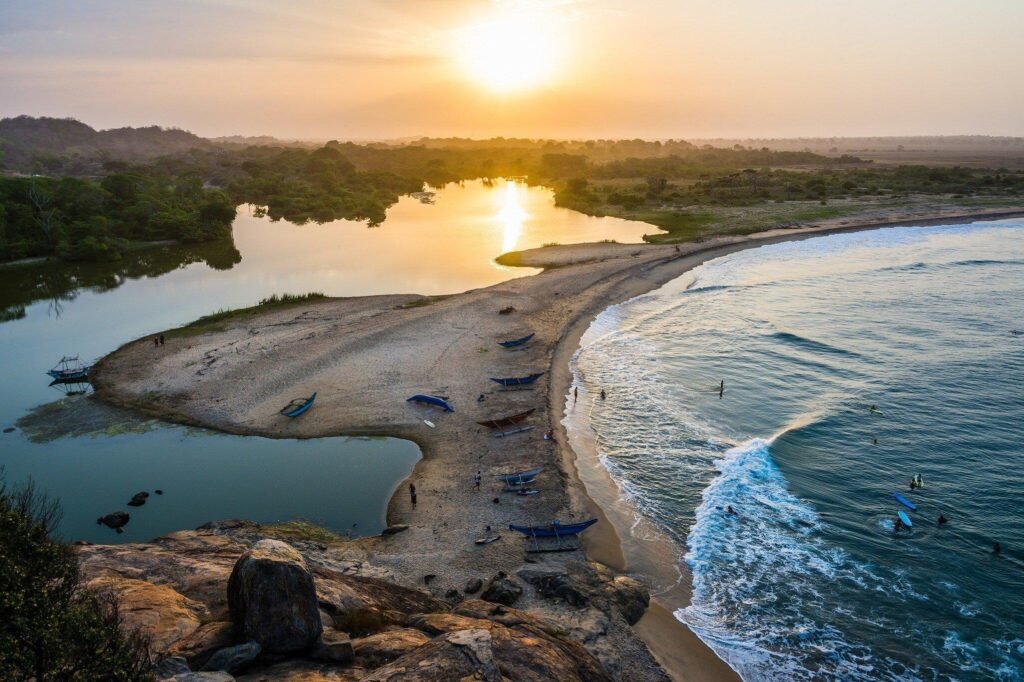
5. Arugam Bay – Surf Culture and East Coast Scenery

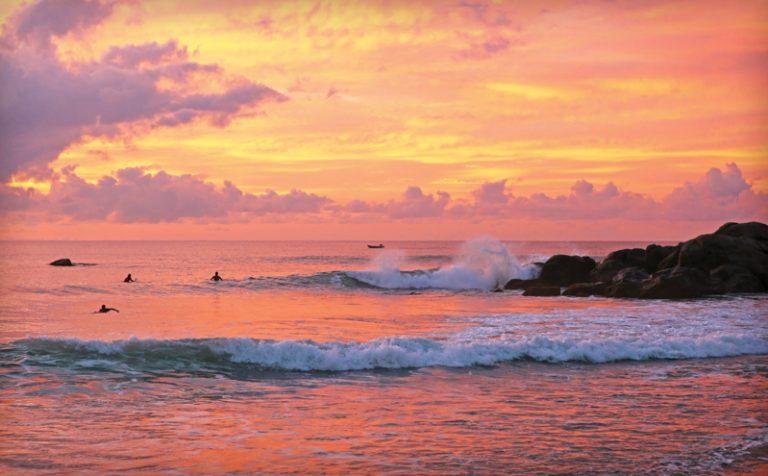
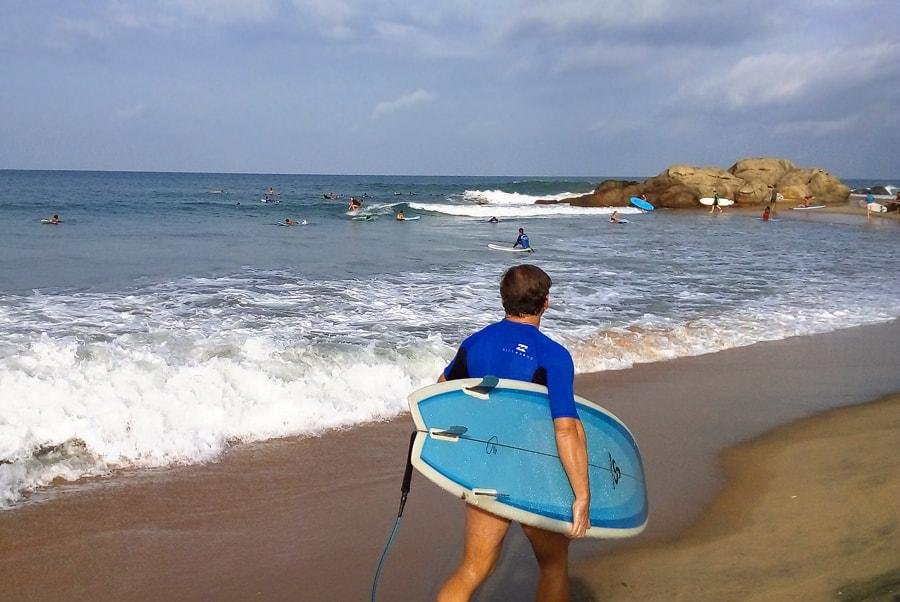
Arugam Bay is internationally known for surfing, its laid-back atmosphere and its connection to Sri Lanka’s east coast.

The main surfing season is generally associated with the period from around May to October, although actual conditions vary with the weather and ocean swell. By October, visitors should check local surf reports rather than assume that ideal waves will be available.

The surrounding region also offers lagoon experiences, local food and opportunities to discover coastal village life.

Best for: Surfers, backpackers and travellers interested in coastal culture.

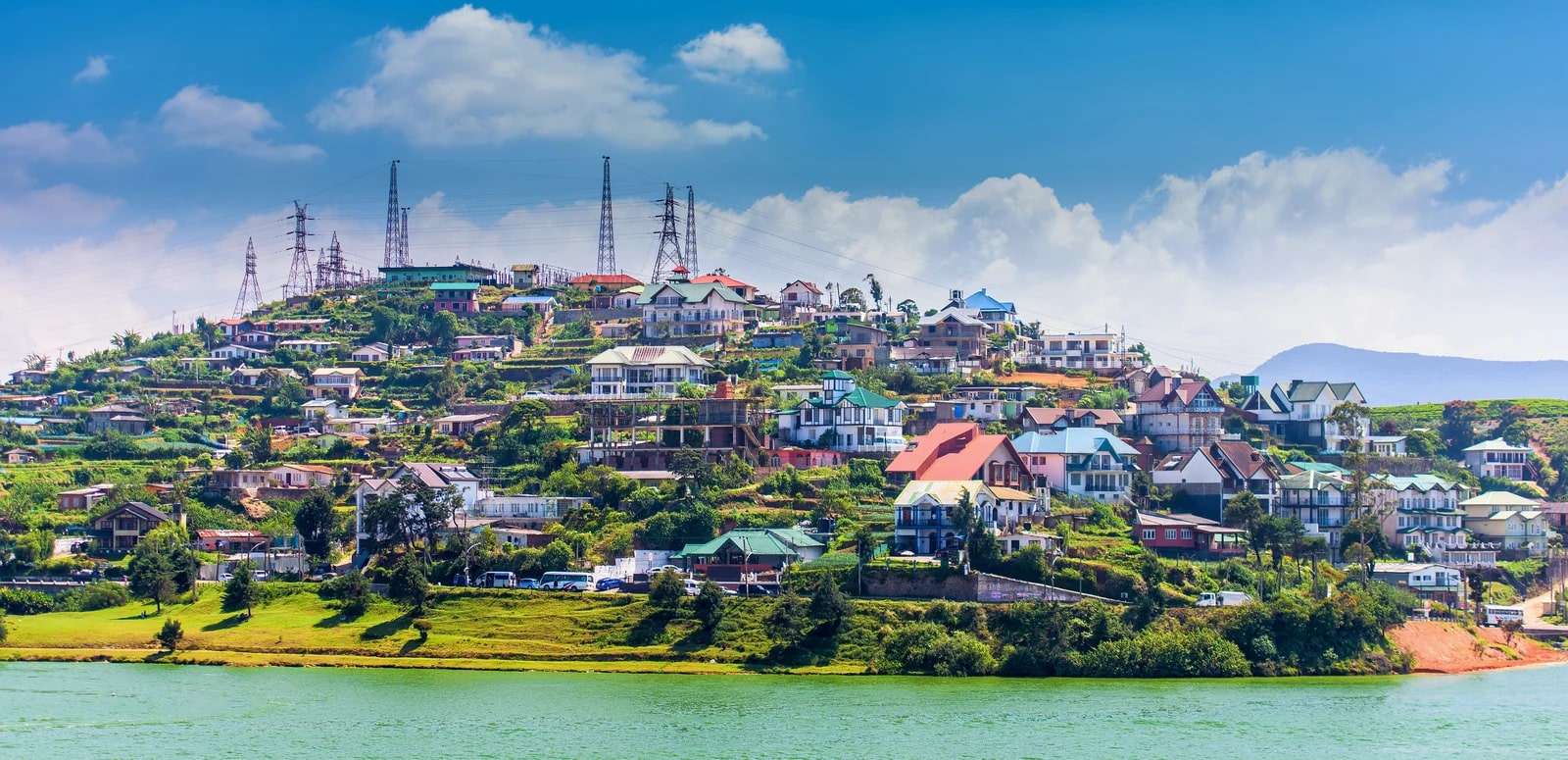
6. Nuwara Eliya – Tea Country and Cool-Climate Landscapes
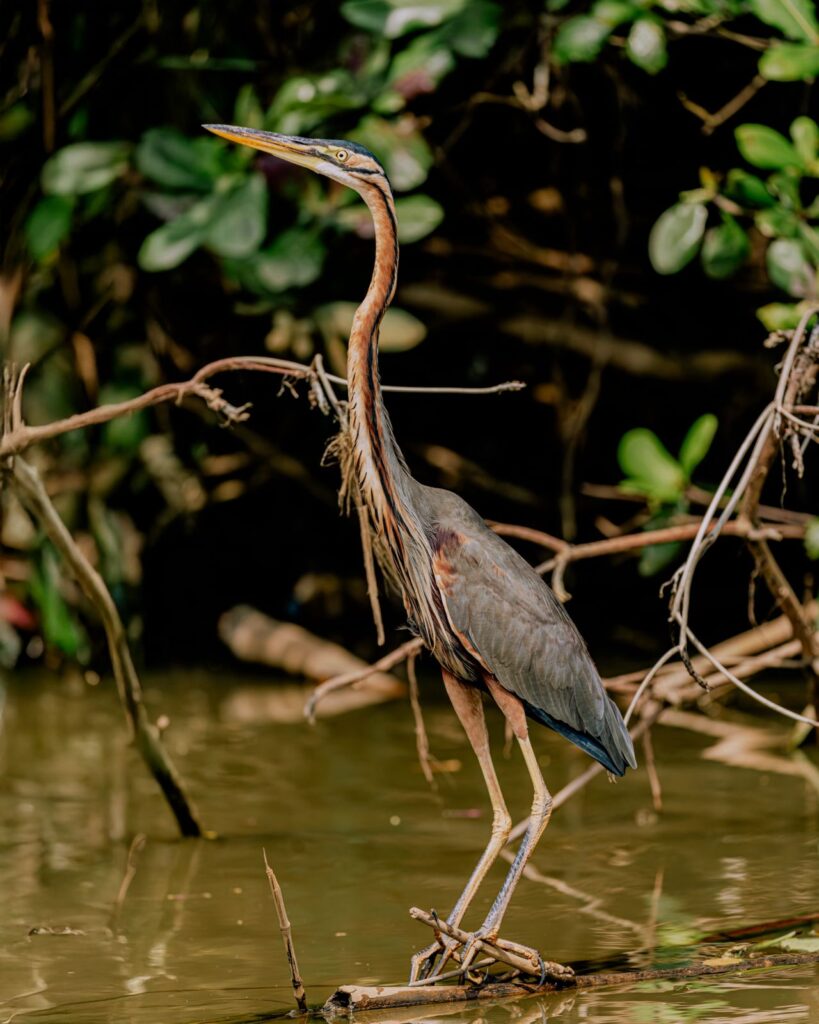
Nuwara Eliya is famous for its tea estates, cool climate, colonial-era architecture and green landscapes.
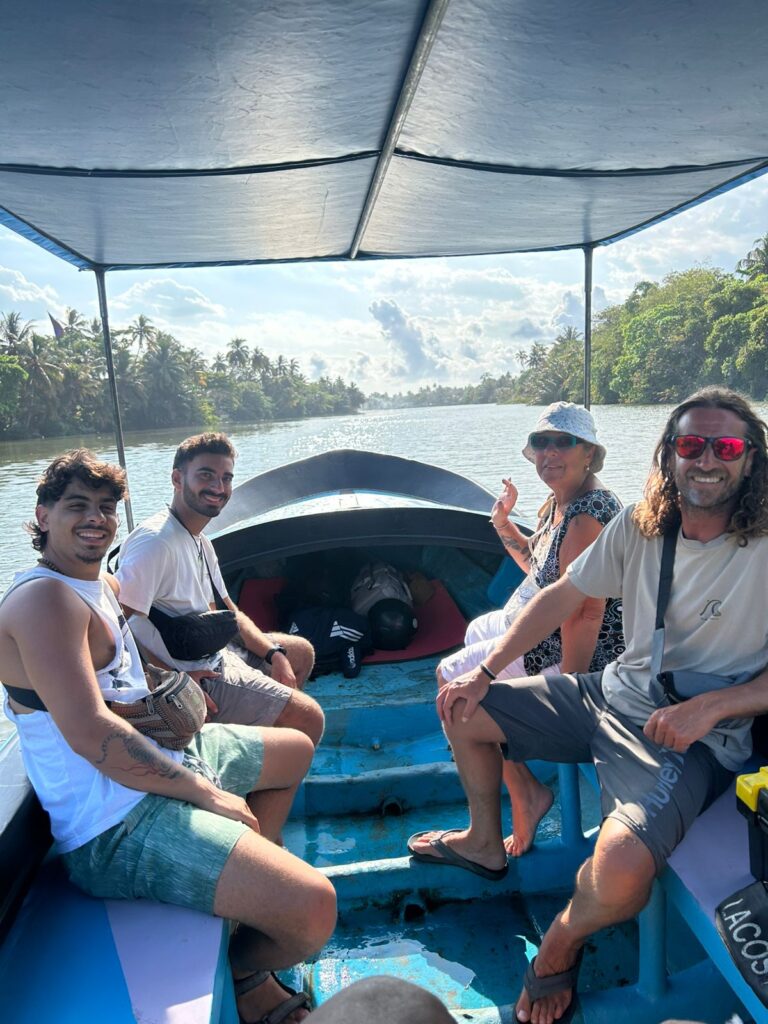
Visitors can explore tea factories, enjoy scenic drives and discover the region’s agricultural heritage. The town is also a useful stop for travellers exploring Sri Lanka’s central highlands.

Because October can bring substantial rainfall to the hill country, check road conditions and warnings before travelling. Avoid exposed viewpoints and steep trails during dangerous weather.

Best for: Tea tourism, scenic drives, couples and nature lovers.

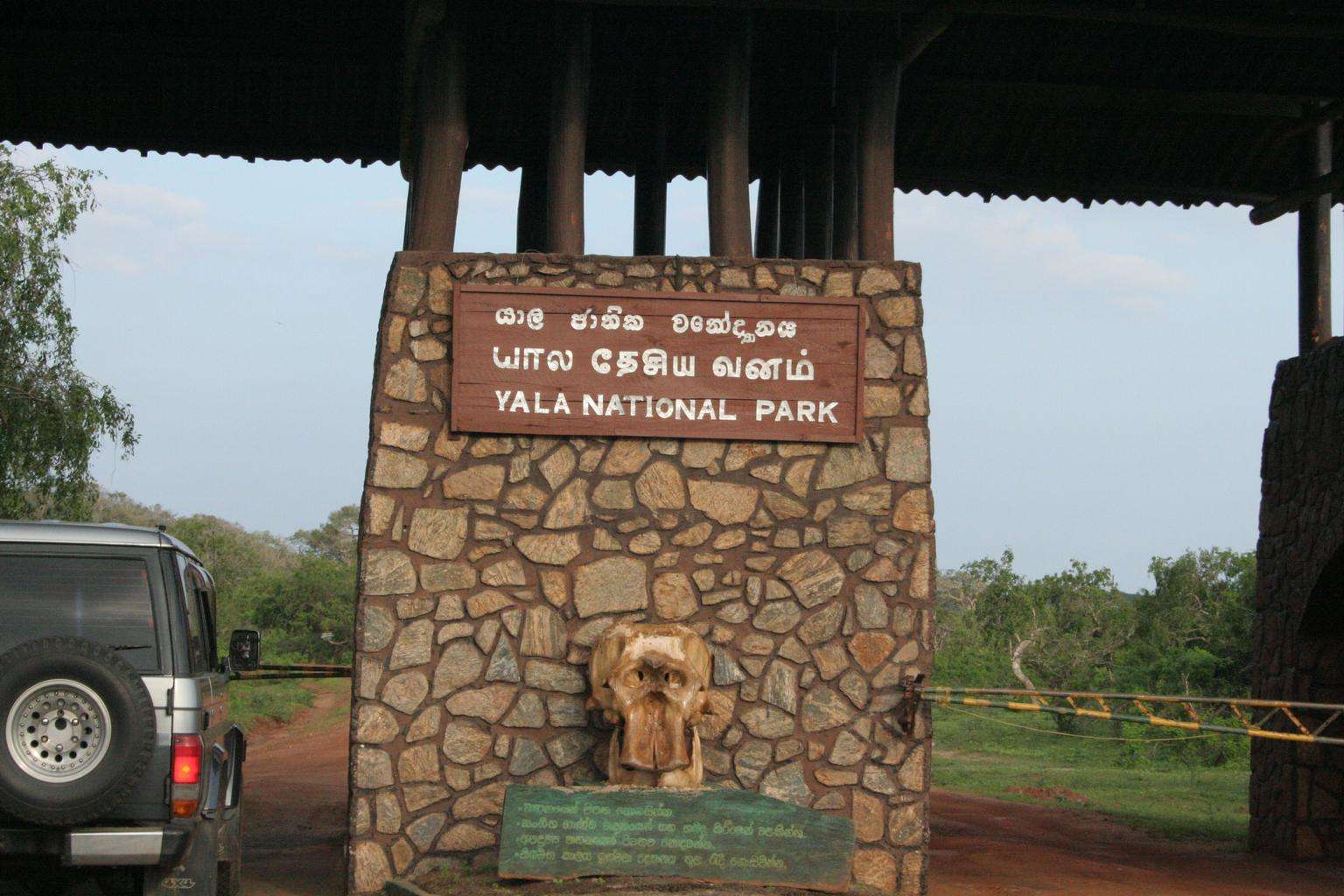
7. Yala National Park – A Wildlife Adventure

Yala National Park is one of Sri Lanka’s best-known wildlife destinations. The park is associated with elephants, crocodiles, deer, many bird species and the elusive Sri Lankan leopard.

Safari experiences depend on wildlife movements, park regulations and prevailing conditions. Rain may affect tracks, access and the comfort of game drives.

Book with a responsible safari operator, follow the instructions of park staff and never approach or feed wild animals.

Best for: Wildlife enthusiasts, photographers and families seeking a guided nature experience.

What Is the Weather Like in Sri Lanka in October?

October is generally a transitional weather period in Sri Lanka. Rainfall can occur across much of the island, and local conditions can change quickly.

The central highlands, including areas around Ella and Nuwara Eliya, may experience mist, heavy showers and slippery roads. Coastal conditions also vary, with rough seas possible during unsettled weather.

Rather than assuming that one coast will always be dry, check forecasts for each destination on your itinerary.

Before travelling:

  • Check the Sri Lanka Department of Meteorology’s latest forecast.
  • Monitor official flood, landslide and severe-weather warnings.
  • Confirm road access with your accommodation or tour operator.
  • Allow extra time for journeys during periods of heavy rain.
  • Keep alternative indoor activities available.

Official weather information: https://meteo.gov.lk/

What Should You Pack for Sri Lanka in October?

A little preparation can make a big difference during a tropical holiday.

Consider packing:

  • Lightweight, breathable clothing.
  • A compact raincoat or umbrella.
  • Comfortable walking shoes with good grip.
  • Waterproof bags for phones, cameras and travel documents.
  • Insect repellent and sunscreen.
  • Reusable drinking-water bottles.
  • A light jacket for cooler evenings in the hill country.
  • Any personal medicines and essential travel documents.

If you plan to visit temples, bring clothing that covers your shoulders and knees. Remove footwear when required and follow the instructions displayed at religious sites.

Is It Safe to Travel Around Sri Lanka During October?

Travel is possible during October, but weather-related risks deserve particular attention. Heavy rain can cause flash flooding, landslides, road closures and disruption to public transport.

Take extra care when travelling through mountainous areas and locations with a history of flooding. Do not attempt to cross flooded roads or walk through fast-moving water. Avoid hiking near steep slopes during heavy rain and obey instructions from local authorities.

Before departure, check:

  • Current weather and landslide warnings.
  • Road conditions and public transport updates.
  • Sea conditions for coastal activities.
  • Your travel insurance coverage for weather-related disruption.
  • Flight information directly with your airline.

For Sri Lanka travel assistance, the Sri Lanka Tourism hotline is 1912. For emergencies, follow the relevant local emergency instructions.

Official travel advice: https://www.gov.uk/foreign-travel-advice/sri-lanka

Suggested 5-Day Sri Lanka Itinerary for October

A short trip can combine cultural attractions, hill-country scenery and coastal experiences. The route below is an example, not a guarantee that every journey or activity will be suitable in current weather.

Day 1: Colombo

Arrive in Sri Lanka, settle into your accommodation and explore selected city attractions if time and conditions permit.

Day 2: Sigiriya area

Travel to the Cultural Triangle and explore local heritage attractions. Allow additional time for the journey and check the forecast before any outdoor climbing.

Day 3: Kandy

Visit cultural landmarks, explore the city and enjoy local food. Adjust outdoor activities according to rainfall.

Day 4: Ella or Nuwara Eliya

Travel into the hill country if roads are open and conditions are safe. Enjoy tea-country scenery and choose short walks only when conditions permit.

Day 5: Return to Colombo

Allow sufficient time for the return journey and your departure flight. Avoid planning a tight connection after a long road trip.

For a longer holiday, consider adding Galle, a suitable beach destination or a guided wildlife experience based on the latest regional forecast.

Sri Lankan Food You Should Try During Your Visit

Food is an essential part of discovering Sri Lanka. Depending on your preferences, look for:

  • Rice and curry with seasonal vegetables and sambols.
  • Hoppers and egg hoppers, often enjoyed at breakfast or dinner.
  • String hoppers served with curry and coconut sambol.
  • Kottu roti, a popular dish prepared with chopped flatbread.
  • Fresh tropical fruit and locally grown tea.
  • Traditional sweets and regional specialities.

Tell restaurant staff about any allergies or dietary requirements. If you prefer mild food, ask for less chilli when ordering.

Practical Travel Tips for October 2026

Plan with flexibility. Avoid building your holiday around a single outdoor activity that cannot be rescheduled.

Choose accommodation carefully. Confirm access, cancellation conditions and transport arrangements, particularly in hilly or flood-prone areas.

Use reliable transport. A reputable driver or tour operator can help check road conditions and adjust routes when necessary.

Respect local culture. Dress appropriately at religious sites, ask permission before photographing people and follow local customs.

Protect the environment. Avoid littering, respect wildlife and choose responsible tour operators.

Check official updates. Weather conditions and warnings can change, so review them again on the day of travel.

Frequently Asked Questions

Is October a good month to visit Sri Lanka?

Yes, October can be suitable for a Sri Lankan holiday, but the weather is variable. Check regional forecasts and plan a flexible itinerary.

Which places should I visit in Sri Lanka in October?

Sigiriya, Kandy, Ella, Nuwara Eliya, Galle and Arugam Bay offer different cultural, natural and coastal experiences. Choose your route according to current weather and access conditions.

Can I visit Sri Lanka’s beaches in October?

Beach visits may be possible, but sea conditions vary by location and day. Check local advice before swimming, surfing or taking boat trips.

Is it possible to go hiking in Ella in October?

It may be possible when trails are open and conditions are safe. Rain can make paths slippery, reduce visibility and increase hazards. Follow local advice and postpone hikes during dangerous weather.

Can I go on a safari in October?

Safari trips may operate depending on park access, weather and management decisions. Confirm conditions with the park or your safari operator before travelling.

What should I check before arriving in Sri Lanka?

Review your flight status, accommodation arrangements, weather forecasts, official safety advisories and any applicable entry requirements.

Final Thoughts: Plan Smart and Discover Sri Lanka

Sri Lanka in October 2026 travel overview

Sri Lanka offers an extraordinary mix of cultural heritage, wildlife, tropical coastlines, tea-covered mountains and welcoming local communities.

October can provide opportunities to experience many of these attractions.

For Sri Lanka in October 2026, travellers should stay flexible and monitor weather.

Plan your journey carefully, choose activities that suit the conditions and give yourself enough time to enjoy the island without rushing.

Ready to explore Sri Lanka? Discover more destinations, travel guides, cultural experiences and local travel inspiration with VisitSrilankan.com.

Travel responsibly. Check official weather and safety updates before visiting any destination.

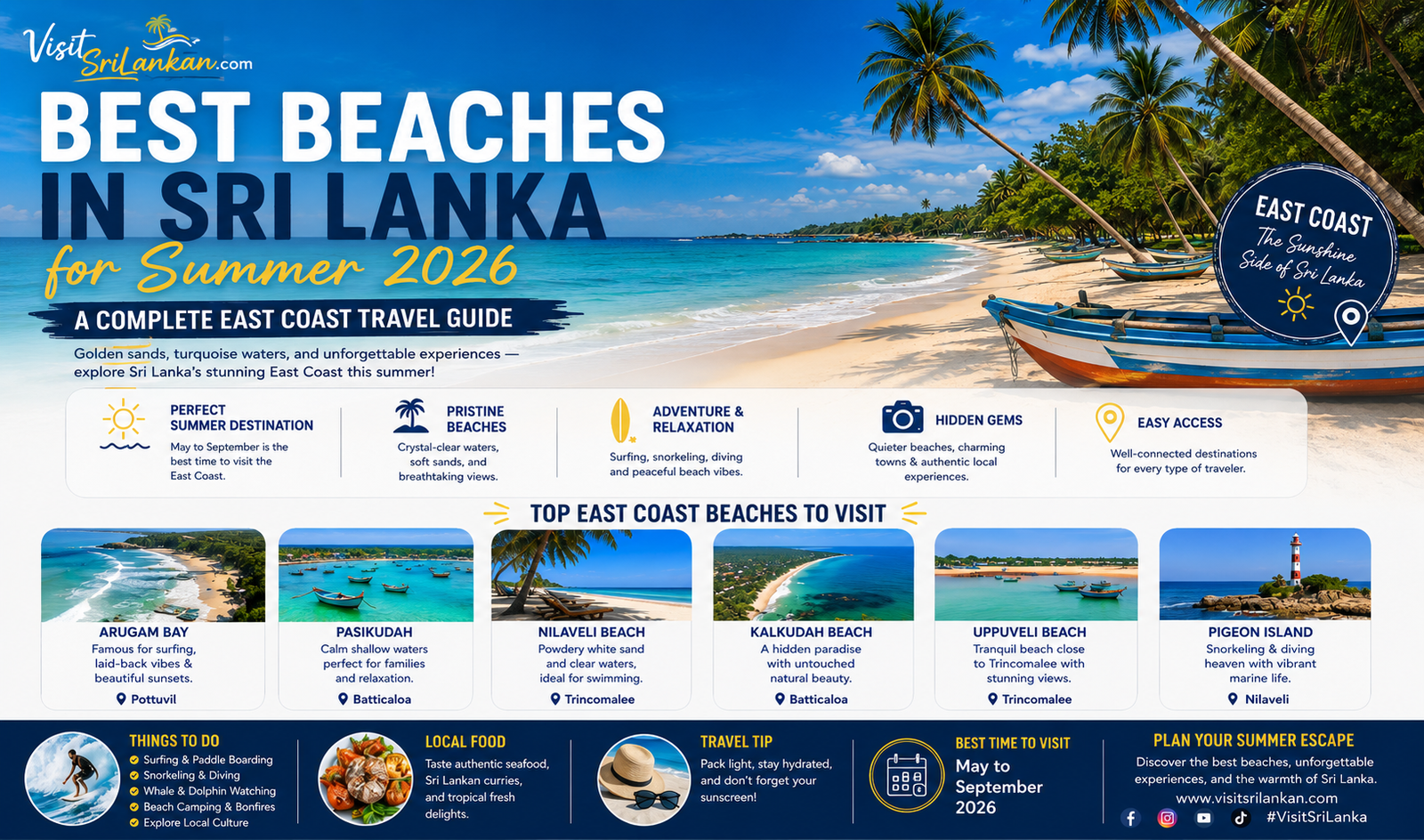
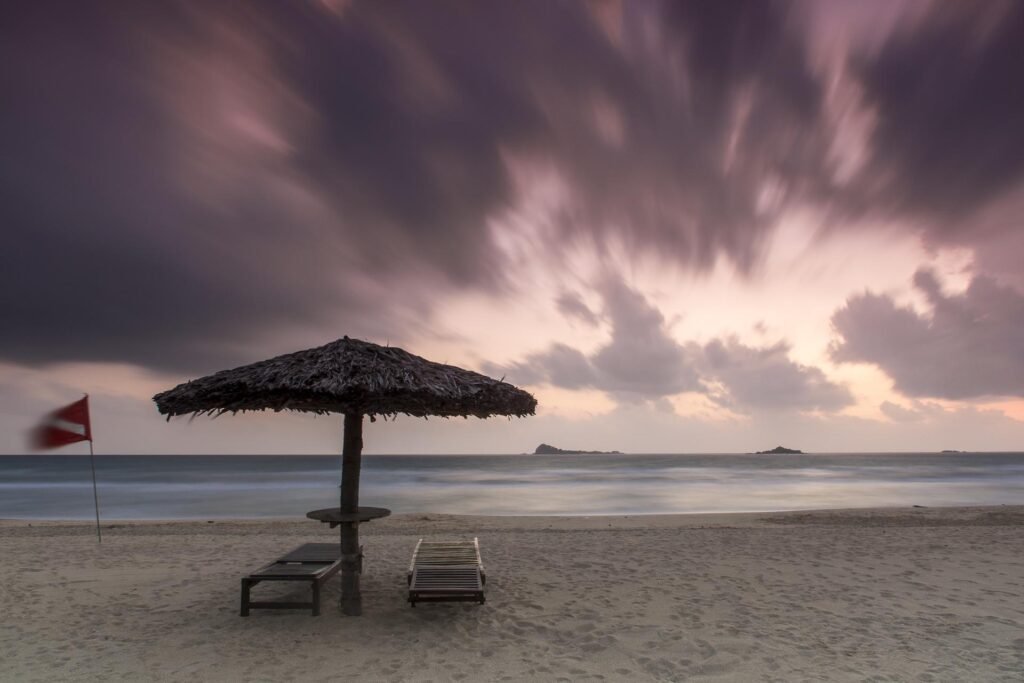
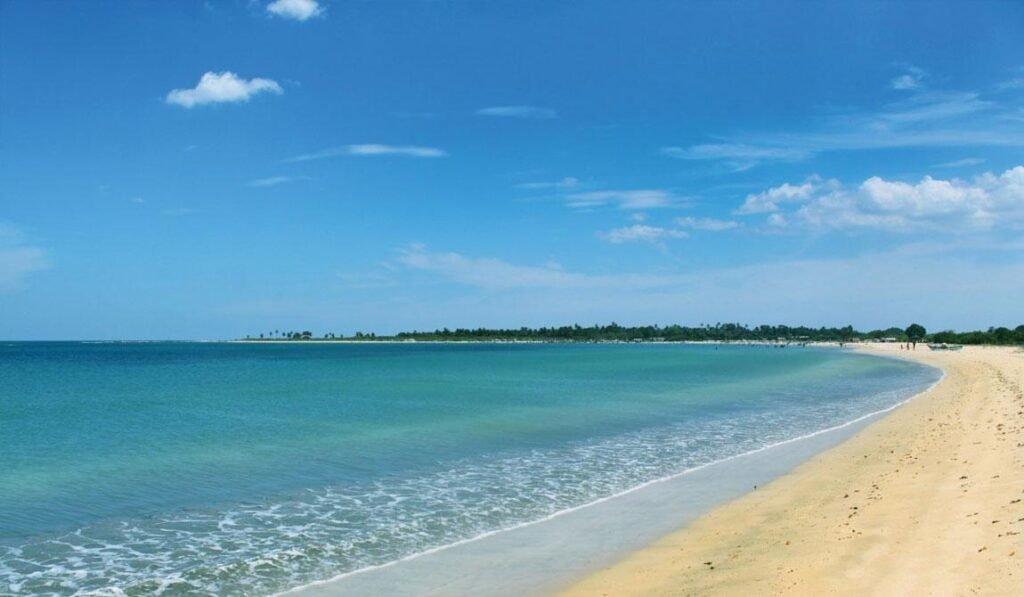
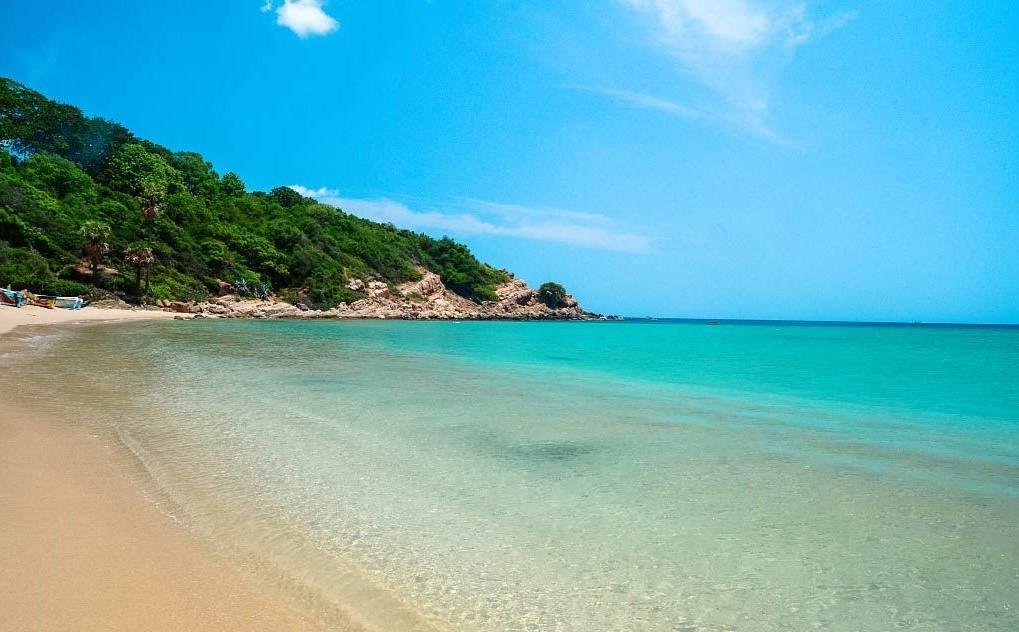
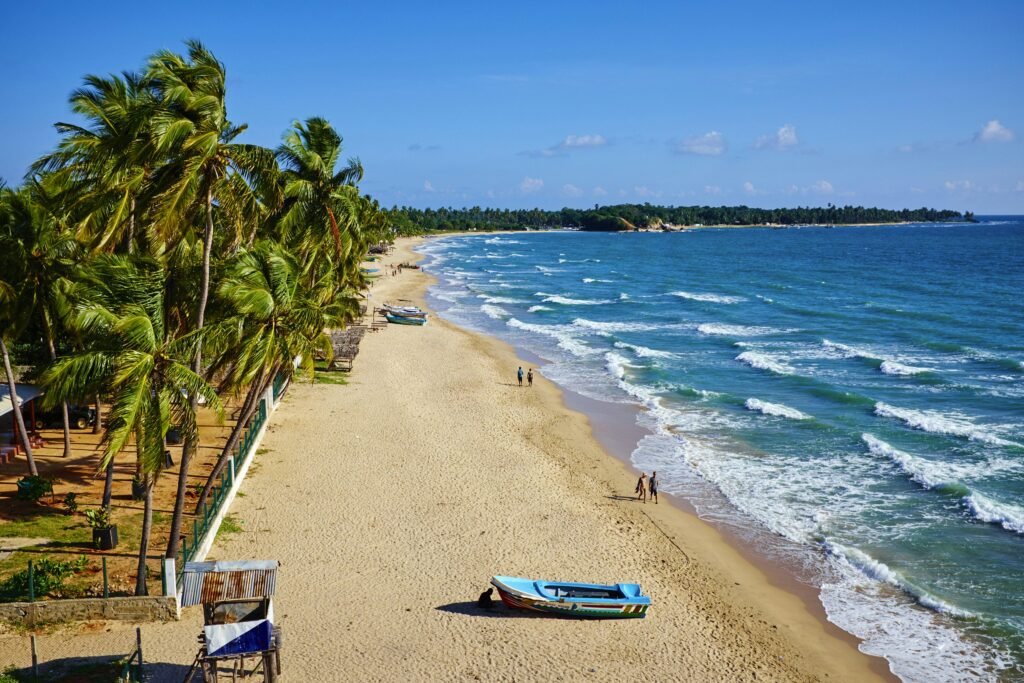
Best Beaches in Sri Lanka for Summer 2026

best beacg in sri lanka

A Complete East Coast Travel Guide


Most travel guides tell you Sri Lanka’s beach season runs from December to March. That’s true — but only for one side of the island. If you’re planning a summer trip to Sri Lanka (May to September), the south and west coasts are in monsoon, and you should be looking east instead.

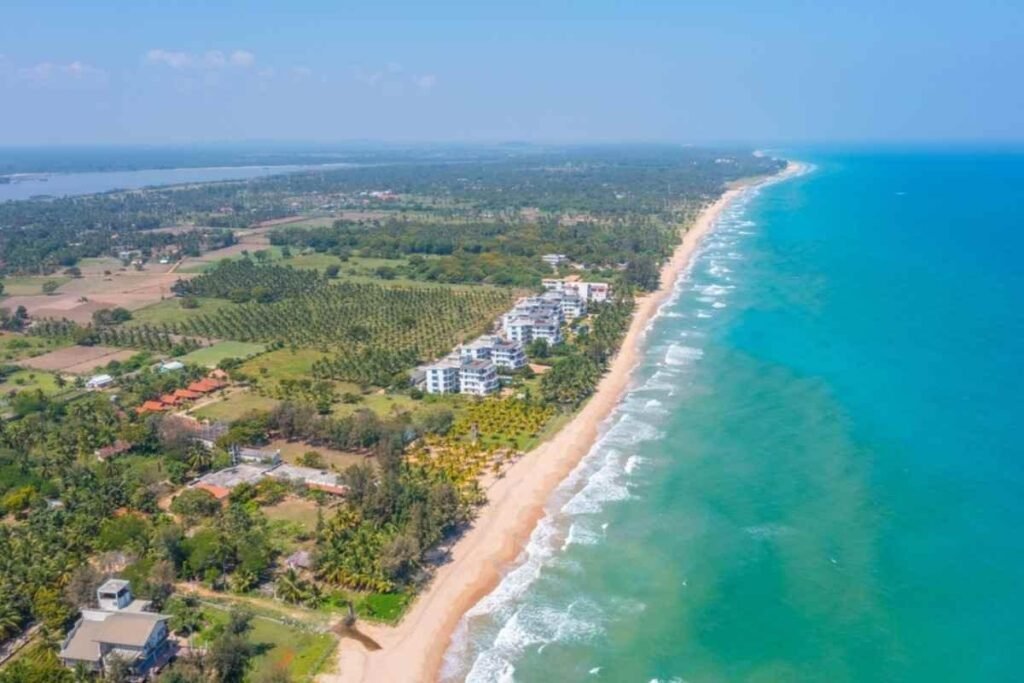
Sri Lanka sits between two monsoon systems, so while Colombo, Bentota, and Mirissa turn grey and rough between May and September, the east coast comes alive. This is when Arugam Bay, Trincomalee, Nilaveli, and Pasikudah get their calmest seas, clearest skies, and best swimming conditions of the year.

At VisitSriLankan.com, we’re based right on this coast — in Pottuvil, next to Arugam Bay — so this guide is built from local knowledge, not just research. Here’s our full ranking of Sri Lanka’s best summer beaches, along with the history, nearby attractions, hotels, and practical facilities (transport, markets, hospitals) you’ll need for each one.

Why the East Coast Is Sri Lanka’s Best Summer Destination

Sri Lanka has two separate monsoon seasons that affect opposite coasts:

  • Southwest monsoon (May–September): brings rain to the south and west coasts (Mirissa, Hikkaduwa, Bentota, Unawatuna)
  • Northeast monsoon (October–January): brings rain to the north and east coasts

That means from May to September, the east coast enjoys dry weather, flat seas, and warm sunshine — exactly while the rest of the island is wet. This makes it the smartest choice for a Sri Lankan summer beach holiday.


Ranked: Best Beaches in Sri Lanka for Summer

1. Arugam Bay — Best for Surfing & Laid-Back Beach Life

Arugam Bay is consistently ranked Sri Lanka’s number-one summer beach destination, and it’s the beach we know best.

History: Known locally as Arugam Kudah, the bay was historically part of the ancient Batticaloa Territory (Mattakallappu Desam). The area carries centuries of heritage — ruins near Pottuvil linked to the mother of the ancient warrior king Dutugemunu are still found near the ancient dunes and inside the nearby Lahugala sanctuary. Long isolated by poor roads and decades of civil conflict, Arugam Bay has only opened up to the wider world in the past 20 years, which is part of why it still feels so unspoiled.

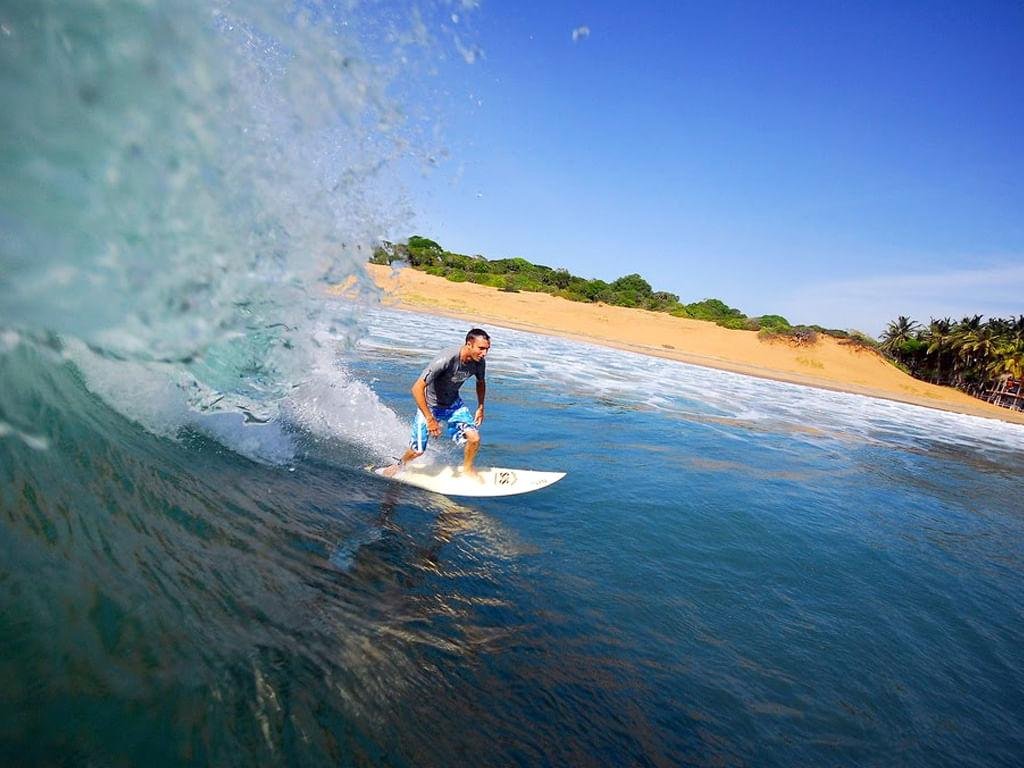
What makes it special: World-class point-break surf (peak season April–October), a relaxed backpacker-meets-boutique vibe, golden sand, and legendary sunsets. Surf breaks range from beginner-friendly to advanced spots like Whisky Point and Pottuvil Point.

Nearby attractions:

  • Kumana National Park – jeep safaris for elephants, leopards, and 200+ bird species
  • Lahugala National Park – large wild elephant herds
  • Pottuvil Lagoon – mangrove boat safaris with crocodiles and birdlife
  • Kudumbigala archaeological reserve – 12th-century monastic caves
  • Okanda Temple – an ancient shrine on a rocky outcrop with legendary links to Sinbad the Sailor
  • Muhudu Maha Viharaya – a 2nd-century BCE Buddhist ruin

Hotels: Options range from beachfront luxury cabanas to mid-range boutique stays and social backpacker hostels, mostly strung along the beach road south of Pottuvil.

Markets & town: Pottuvil, about 4 km north, is the commercial hub — the place for banks, shops, tailors, and hardware, and where you’ll find handloom textiles, mats, and baskets sold in small local markets. Arugam Bay’s own main street has surf shops, cafés, and casual restaurants.

Transportation: Reachable by private taxi/tuk-tuk, long-distance bus, or train to Ampara district followed by road transfer. Colombo to Arugam Bay is roughly 320 km by road.

Hospitals: Pottuvil Base Hospital is the main government hospital, recently upgraded with a new surgical complex, emergency unit, and blood bank. Arugam Bay itself has a government clinic and a private clinic; Pottuvil also has a private clinic and pharmacy.


2. Nilaveli & Uppuveli (Trincomalee) — Best for Families & Snorkeling

History: Trincomalee is one of the world’s finest natural deep-water harbours and has been fought over for centuries — by the Portuguese, Dutch, French, and British. The town’s landmark, Fort Frederick, was originally built by the Portuguese in 1623 using rubble from the destroyed Koneswaram Temple, then rebuilt by the Dutch and expanded by the British into the Eastern Province’s administrative hub.

What makes it special: Wide stretches of powder-white sand, calm turquoise water, and some of the best snorkeling and diving in the country. Nilaveli Beach stretches about 4 km, backed by jungle.

Nearby attractions:

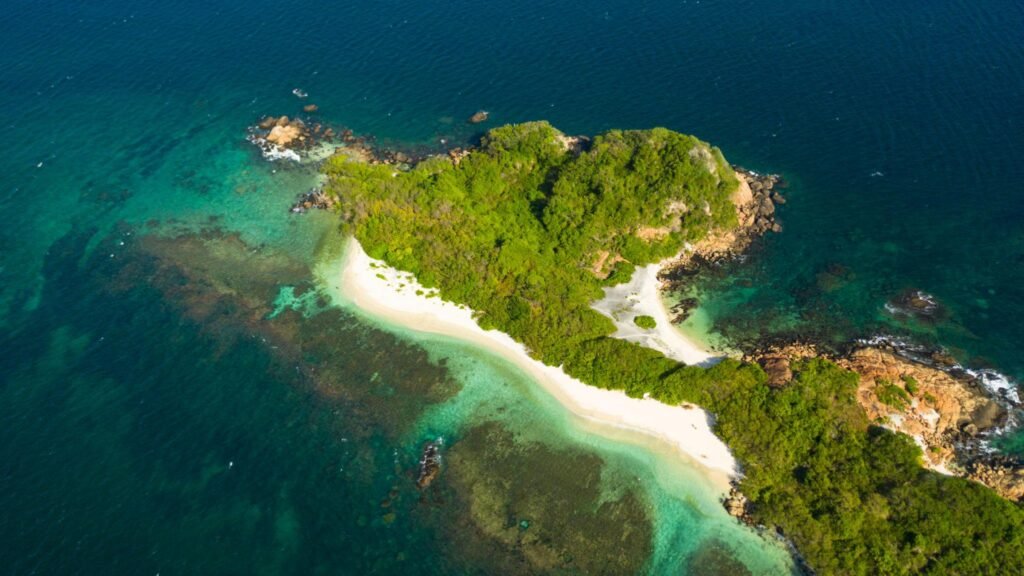
  • Pigeon Island National Park – coral reefs, reef sharks, and hawksbill turtles
  • Koneswaram Temple – a revered Hindu shrine atop Swami Rock with sweeping ocean views
  • Fort Frederick – colonial fortress with a cemetery, Governor’s Mansion, and panoramic harbor views
  • Kanniya Hot Springs – natural hot-water wells
  • Marble Beach – a secluded, jungle-fringed cove nearby

Hotels: Trincomalee and Nilaveli have everything from beachfront resorts (e.g., resorts directly on Nilaveli Beach) to mid-range hotels in Trinco town, many within walking distance of the fish market and Fort Frederick.

Markets & town: Trincomalee town centers around a clock tower and central bus station, with a lively fresh fruit and vegetable market, a separate fish market, and streets full of textile and tailor shops.

Transportation: Trincomalee is well connected by train and bus from Colombo and Kandy; China Bay Airport also serves the area. Nilaveli/Uppuveli are a short tuk-tuk or taxi ride north of Trinco town.

Hospitals: Trincomalee has a government General Hospital serving the district, along with private clinics and pharmacies in the town center.


3. Pasikudah & Kalkudah — Best for Calm, Shallow Swimming

History: Kalkudah, whose name comes from a Tamil term meaning “rock bay,” is a coastal resort town roughly 35 km northwest of Batticaloa. Like much of the east coast, tourism here was badly damaged by the 2004 Indian Ocean tsunami, but the area has since rebuilt into one of the region’s most popular resort strips.

What makes it special: Pasikudah is famous for its shallow, horseshoe-shaped bay with unusually calm, warm water — ideal for families, children, and inexperienced swimmers. Kalkudah, just next door, offers a longer, wilder 4 km stretch of golden sand backed by coconut palms.

Nearby attractions:

  • Batticaloa Lagoon and Batticaloa Fort
  • Batticaloa Lighthouse – built by the British in 1913
  • Elephant Rock Beach – a sandstone rock naturally eroded into an elephant-like shape
  • Kallady Beach and Saint Nicholas Church, Chenkalady
  • Day trips to Polonnaruwa’s ancient ruins and Minneriya/Kaudulla for elephant safaris

Hotels: This stretch is home to some of the east coast’s most polished resorts, from 5-star beachfront properties to boutique glamping-style stays and simple guesthouses.

Markets & town: Batticaloa town, about 30 minutes away, has the main markets, shops, and the historic Batticaloa Fort area. The small town of Valaichchenai is the nearest local hub to Kalkudah/Pasikudah itself.

Transportation: Daily trains run from Colombo Fort Station to Batticaloa, from which it’s a short taxi or bus ride to Pasikudah/Kalkudah. Regular buses also run from Batticaloa’s main bus station.

Hospitals: Batticaloa Teaching Hospital is the main referral hospital for the district; smaller government and private clinics serve Valaichchenai and the resort area directly.


Quick Comparison Table

BeachBest ForPeak SeasonNearest Hospital Town
Arugam BaySurfing, nightlife, backpacker vibeApril–OctoberPottuvil
Nilaveli/UppuveliFamilies, snorkeling, divingMay–SeptemberTrincomalee
Pasikudah/KalkudahCalm swimming, luxury resortsMay–SeptemberBatticaloa

Practical Travel Tips for the East Coast in Summer

  • Best months: May to September for the driest, calmest conditions across all three areas.
  • Getting there: Fly into Colombo (Bandaranaike International Airport), then travel by private car, bus, or train. Arugam Bay is roughly 6–7 hours by road from Colombo; Trincomalee and Pasikudah are closer, around 4–5 hours.
  • Getting around locally: Tuk-tuks and small taxi services are the easiest way to move between beaches, markets, and attractions within each town.
  • Money & connectivity: Carry cash for smaller towns like Pottuvil or Valaichchenai, where card facilities can be limited; ATMs are available in the main towns (Trincomalee, Batticaloa, Pottuvil).
  • Health & safety: Each area has at least one government hospital plus private clinics for tourists — details listed above for each beach. Basic travel insurance is strongly recommended given some facilities are limited outside main towns.
  • Pack for the sun: Reef-safe sunscreen, a hat, and light cotton clothing — the east coast in summer is hot, dry, and sunny with little rain.

Final Word

If you’re chasing sun, calm seas, and fewer crowds this summer, Sri Lanka’s east coast — Arugam Bay, Nilaveli, and Pasikudah — is where the good weather actually is between May and September. Each stretch has its own character: Arugam Bay for surf and atmosphere, Nilaveli for snorkeling and family-friendly calm, and Pasikudah for shallow water and polished resorts.

For more detailed guides on transportation, hotel bookings, and things to do in each of these towns, browse the rest of our travel guides at VisitSriLankan.com.

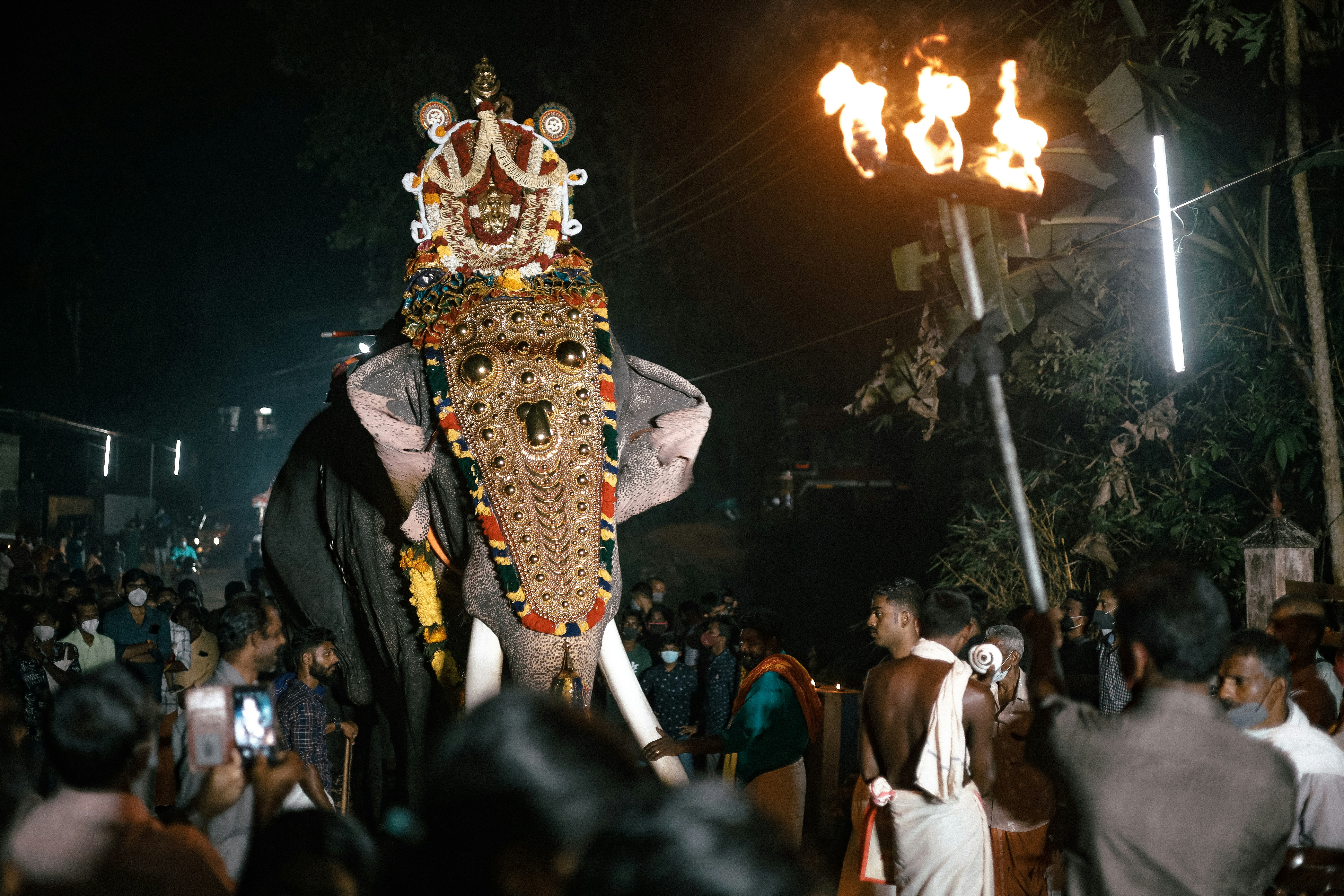
Kandy Esala Perahera: Everything You Need to Plan Your Visit

A Comprehensive Travel Guide to the Esala Perahera in Kandy, Sri Lanka

The History and Significance of the Esala Perahera

The Esala Perahera, held annually in Kandy, Sri Lanka, is a vibrant testament to the country’s rich historical and cultural heritage. The origins of this grand festival can be traced back to the ancient Kandyan Kingdom, with its roots deeply embedded in the traditions and religious practices of Buddhism. Historically, the festival commemorates the arrival of the sacred tooth relic of the Buddha, which is housed within the Temple of the Sacred Tooth Relic.

This relic is not merely a physical artifact; it represents a profound spiritual connection for Buddhists. Thus, the Esala Perahera serves as a homage to the relic, showcasing the reverence and devotion of the Buddhist community in Sri Lanka. The festival is characterized by a series of elaborate processions filled with vibrant decorations, traditional dances, and ceremonies that manifest the cultural heritage of the nation. The significance of the event lies not only in its religious devotion but also in its role as a unifying force for the diverse communities across Sri Lanka, as people from various backgrounds come together to partake in this splendid festival.

Over the centuries, the Esala Perahera has evolved into a massive celebration, drawing both local and international visitors. Its rituals are imbued with symbols and meanings that reflect the Buddhist faith and Sri Lankan culture. For instance, the presence of caparisoned elephants, dancers, drummers, and fire performers enlivens the streets, portraying a spectacle that embodies centuries of tradition. Furthermore, the festival resonates with the themes of purification, merit-making, and cultural continuation, ensuring that the historical significance of the Esala Perahera remains relevant in contemporary society. As such, it stands as a beacon of Kandy’s cultural landscape, celebrated with great enthusiasm each year.

Processions and Cultural Elements of the Esala Perahera

The Esala Perahera is one of the most majestic and culturally rich festivals in Sri Lanka, held annually in Kandy. At the heart of this vibrant celebration are the various processions, each with its own unique significance and characteristics. The festival primarily features two main processions: the Kumbal Perahera and the Randoli Perahera, which take place in successive nights leading up to the final grand procession.

The Kumbal Perahera marks the initial phase, focusing on the veneration of the sacred tooth relic of Lord Buddha. Processions during this stage feature breathtaking displays, where traditionally adorned elephants participate, showcasing the elegance and majesty of these remarkable creatures. These caparisoned elephants are adorned with intricate textiles and ornaments, symbolizing the rich cultural heritage of Sri Lanka.

As the festival progresses, the Randoli Perahera unfolds, highlighted by a more elaborate and larger spectacle. This stage is renowned for its captivating performances that include traditional dancers, drummers, and whip crackers. The dancers, dressed in colorful attire and intricate masks, tell stories through their movements, enhancing the religious themes associated with the procession. The drumming provides a lively rhythm, entrancing attendees while the whip crackers showcase their skills, adding an exhilarating atmosphere to the event.

A central element of the Esala Perahera is the sacred casket procession, during which the replica of the relic is carried through the streets with great reverence. This procession holds immense spiritual significance, as it symbolizes the dissemination of supreme wisdom and teachings of Buddhism across the community. It is a moment of great devotion, reflecting the unwavering faith of the spectators, who gather to capture a glimpse of the sacred casket as it passes through Kandy.

Festival Schedule, Viewing Locations, and Travel Tips

The Esala Perahera, an annual festival celebrated in Kandy, Sri Lanka, showcases the rich cultural heritage of the region. Scheduled to take place during the full moon of the Esala month (typically July or August), the festival spans ten days, culminating in the grand procession known as the Diya Gamedda, which is renowned for its colorful parades and majestic elephants. Attendees can expect vibrant displays of traditional drumming, dance performances, and the iconic relic casket that holds the Sacred Tooth Relic of Buddha. The main festivities occur on the final five nights, particularly the last night, which is the most opulent and well-attended.

To make the most of this extraordinary event, choosing the right viewing location is crucial. Prime spots include strategically located areas around the Temple of the Tooth, such as the Maligawa entrance and the Kandy Lake viewing platform. Additionally, securing tickets for grandstand seating provides an unobstructed view of the parades, allowing visitors to fully appreciate the intricacies of the procession. It is advisable to purchase tickets in advance through authorized vendors as they can sell out quickly, particularly for peak days.

When attending the Esala Perahera, dressing modestly is important due to the religious significance of the festival. Lightweight, breathable clothing is recommended due to the warm weather, but attire should also be respectful, avoiding revealing outfits. For photography enthusiasts, it is essential to be mindful of photography etiquette; flash photography may be prohibited in certain areas, particularly during religious moments, so it’s best to seek permission when in doubt. By adhering to these guidelines, visitors can enhance their experience and participate in the celebration respectfully.

Accommodation, Transportation, and Nearby Attractions

Finding suitable accommodation in Kandy during the Esala Perahera festival is essential for a comfortable visit. The city offers a range of lodging options that cater to various budgets. For budget travelers, hostels and guesthouses such as the Kandy View Hotel and The Backpacker’s Hostel provide economical yet pleasant stays. Mid-range options like the Hotel Hilltop and OZO Kandy blend comfort with affordability, featuring modern amenities and beautiful views. For those seeking luxury, the Earl’s Regency Hotel and Mahaweli Reach Hotel offer an upscale experience, complete with fine dining and premium services.

Transportation options are plentiful in Kandy, especially during the festival period. The city is accessible via public bus services, which connect Kandy with major cities in Sri Lanka. Additionally, the Kandy railway station serves as a hub for train travel, offering a scenic journey through the hills. Once in Kandy, tuk-tuks are a popular mode of transport for short distances and can be easily hailed throughout the city. For a more comfortable experience, visitors can opt for taxis or app-based ride services.

While in Kandy, there are several nearby attractions worth exploring. The Temple of the Tooth, a UNESCO World Heritage site, is a must-see, renowned for housing the sacred relic of the Buddha. Nature enthusiasts will appreciate the serene Royal Botanical Gardens at Peradeniya, where a diverse collection of flora thrives. Additionally, the Kandy Lake, situated in the heart of the city, offers a picturesque setting for leisurely strolls and relaxation. Visitors can also immerse themselves in local culture at the Kandy Cultural Centre, which showcases traditional dance and arts. By taking advantage of these accommodation, transportation, and attraction options, visitors can enhance their travel experience during the Esala Perahera festival in Kandy.

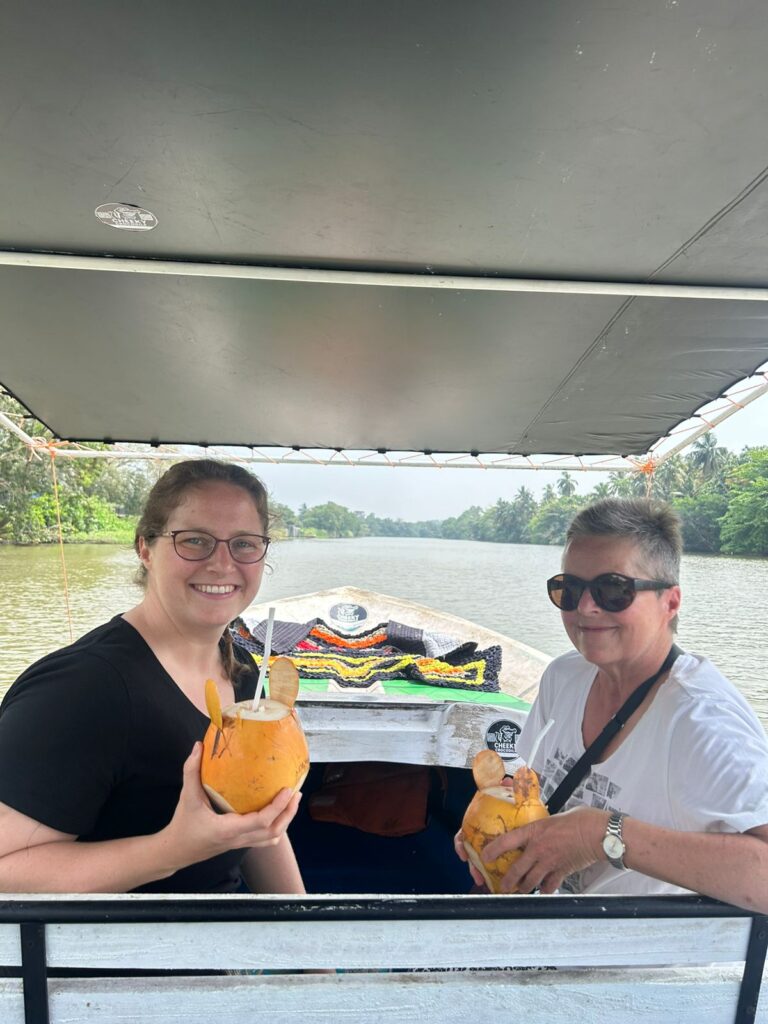
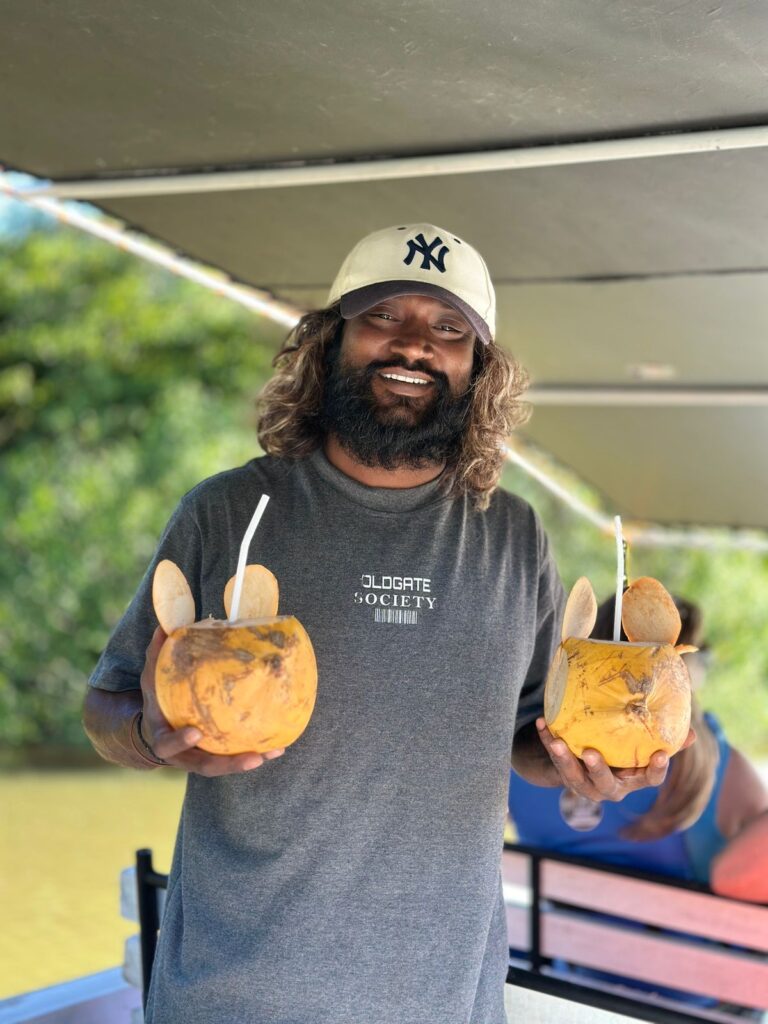
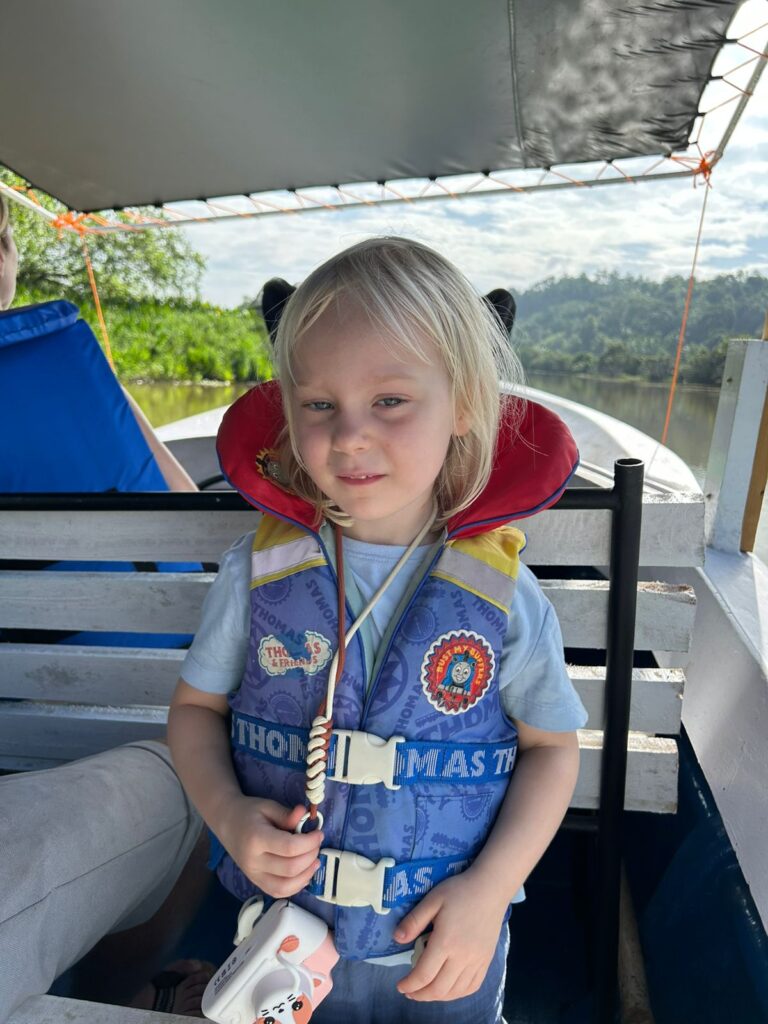
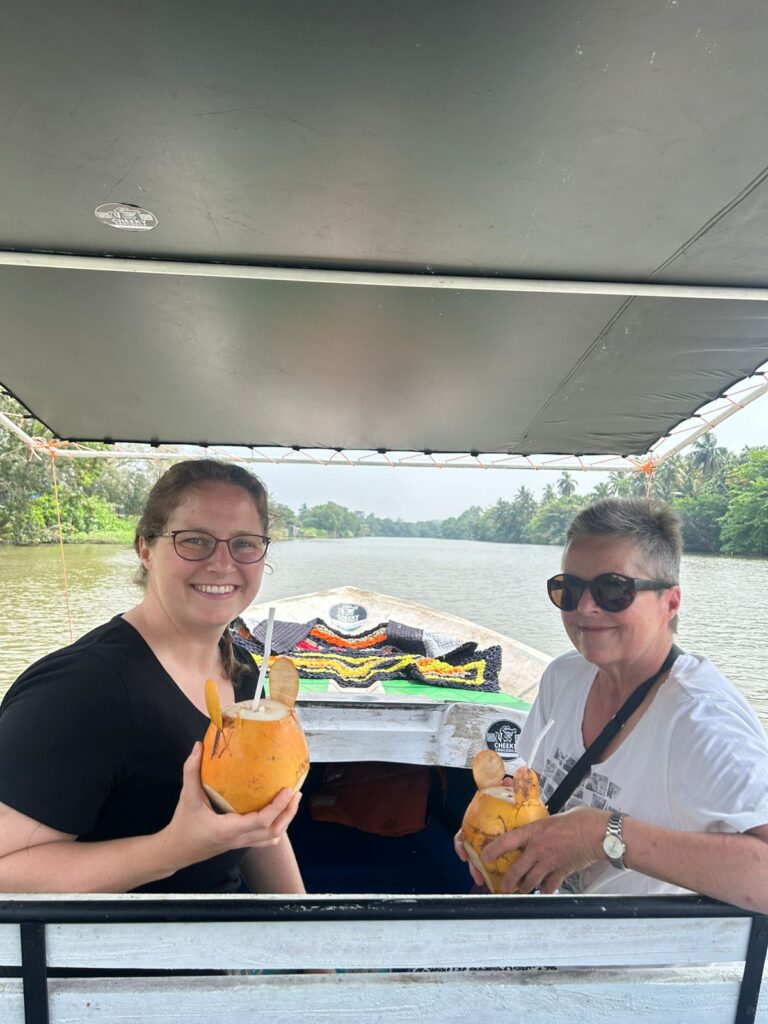
Nilwala River

🐊Discover the Magic of the Nilwala River

Sri Lanka is famous for its golden beaches, ancient temples, and wildlife adventures — but one hidden treasure that continues to amaze travelers is the breathtaking Nilwala River.

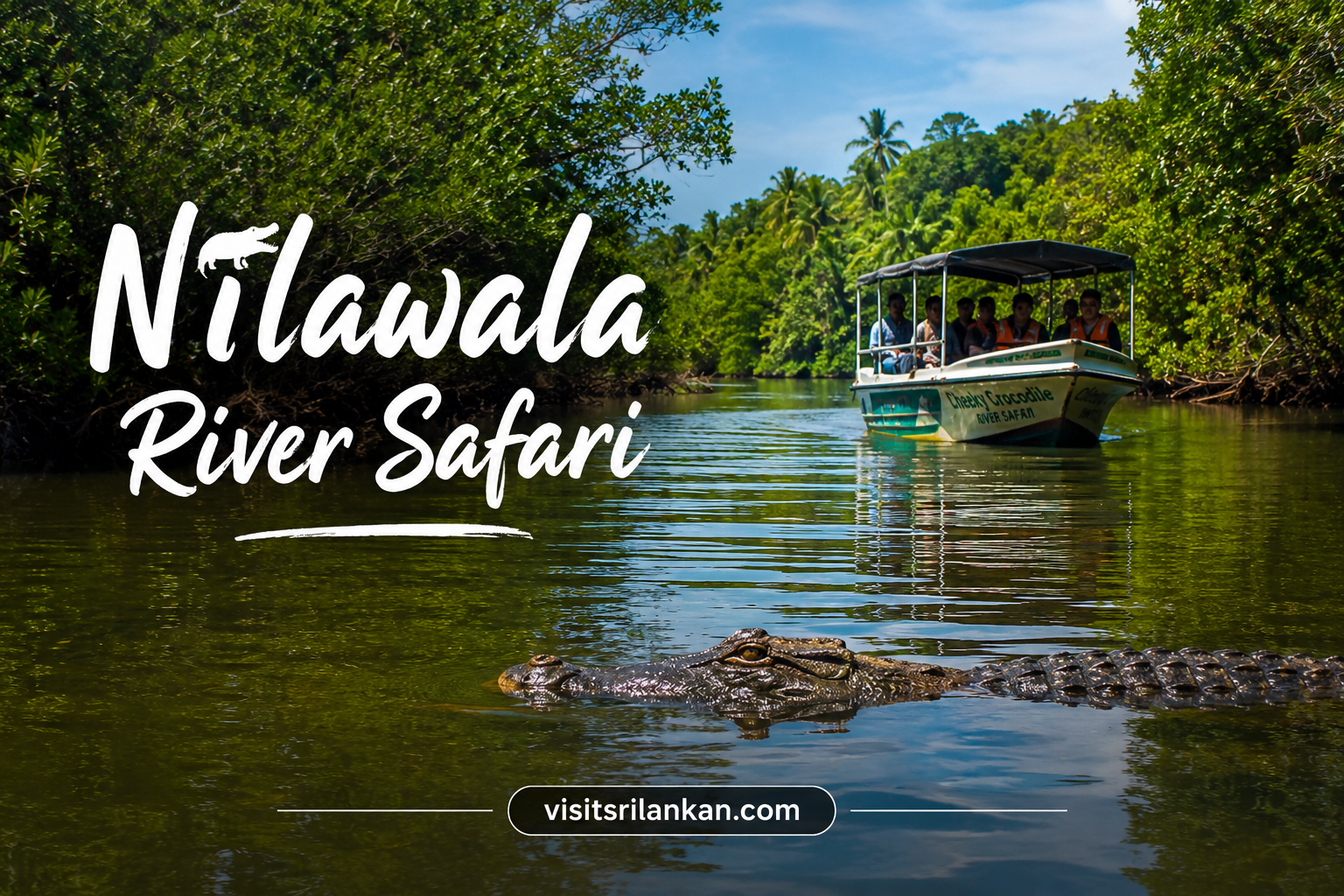
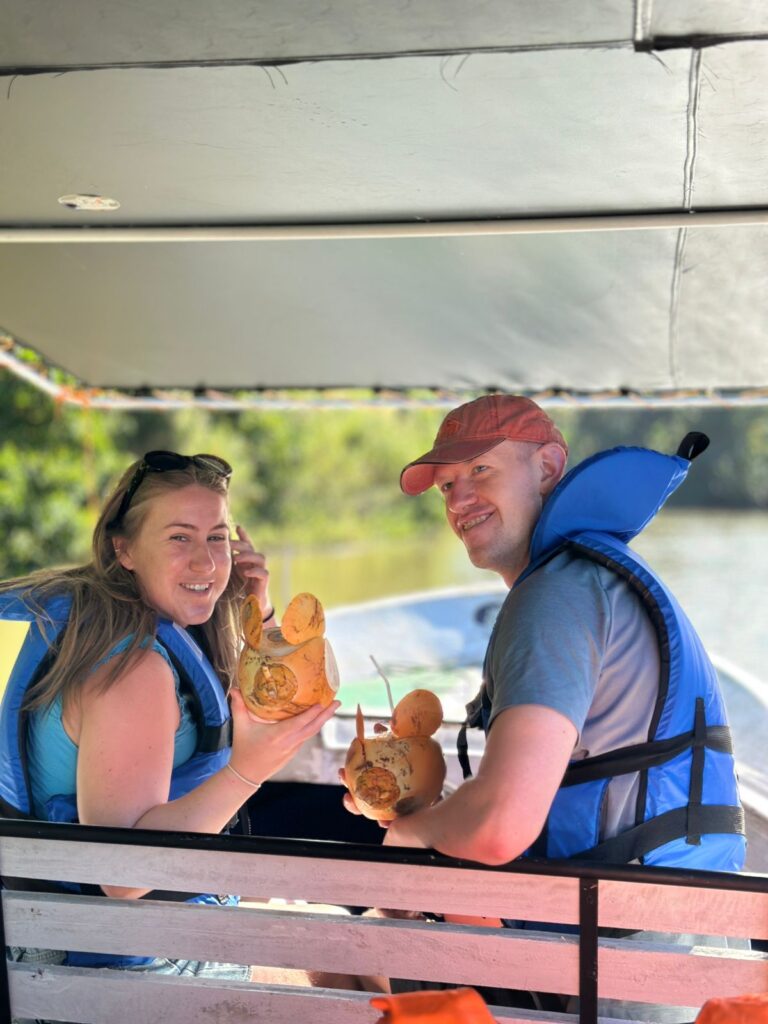
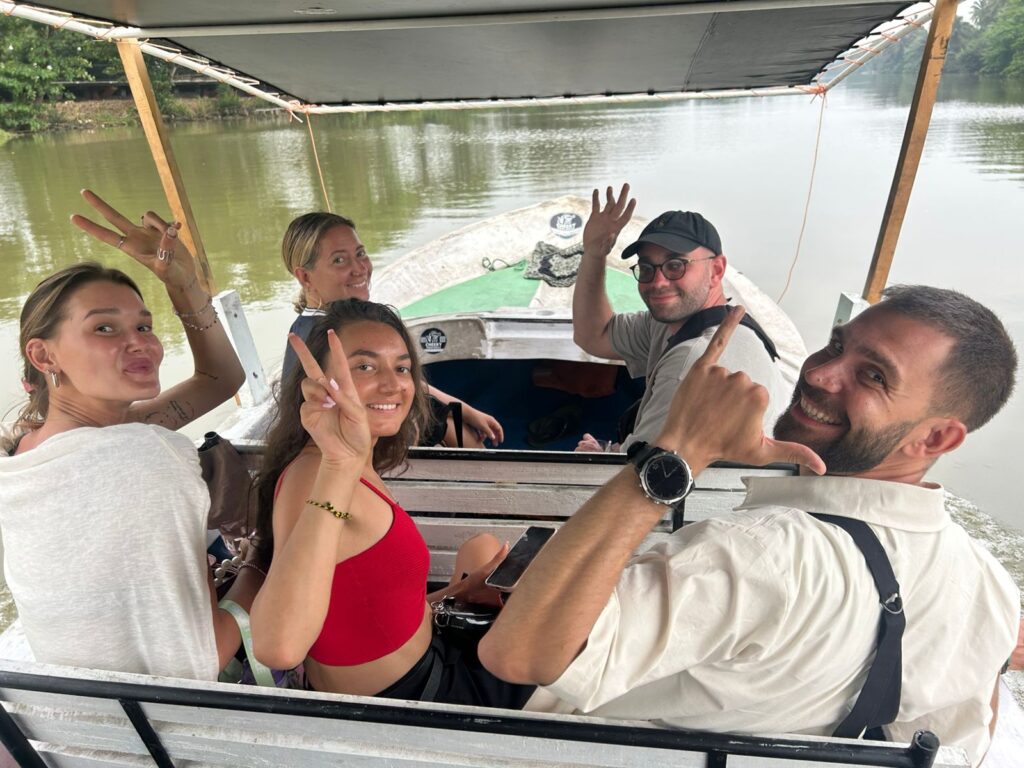
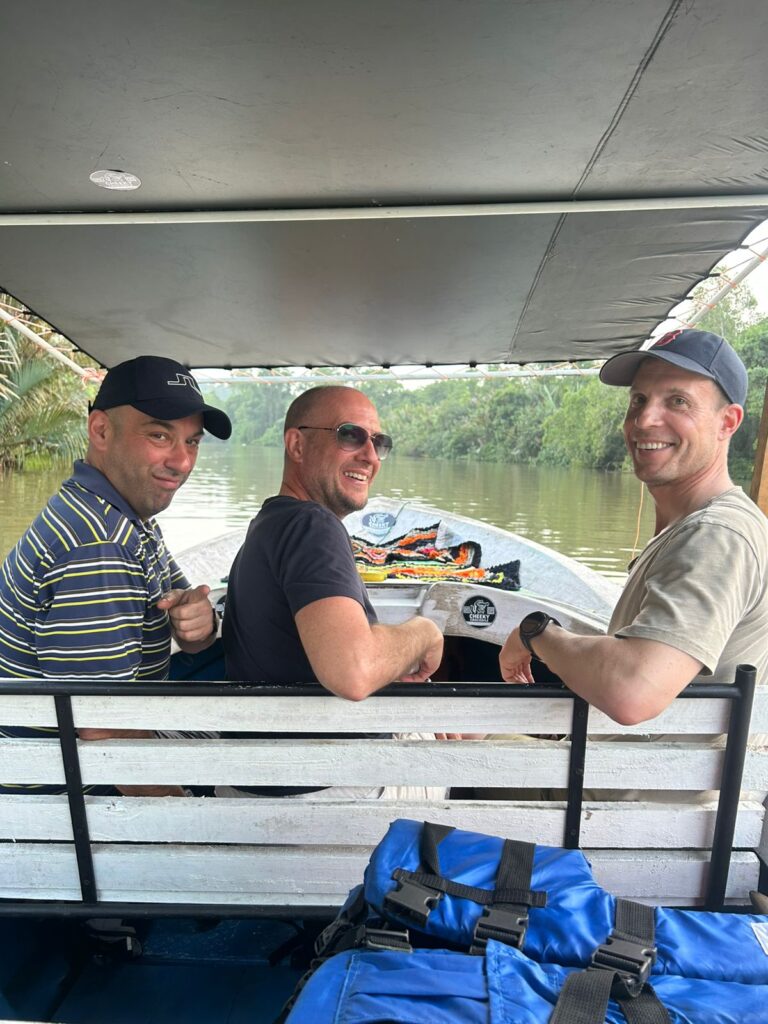
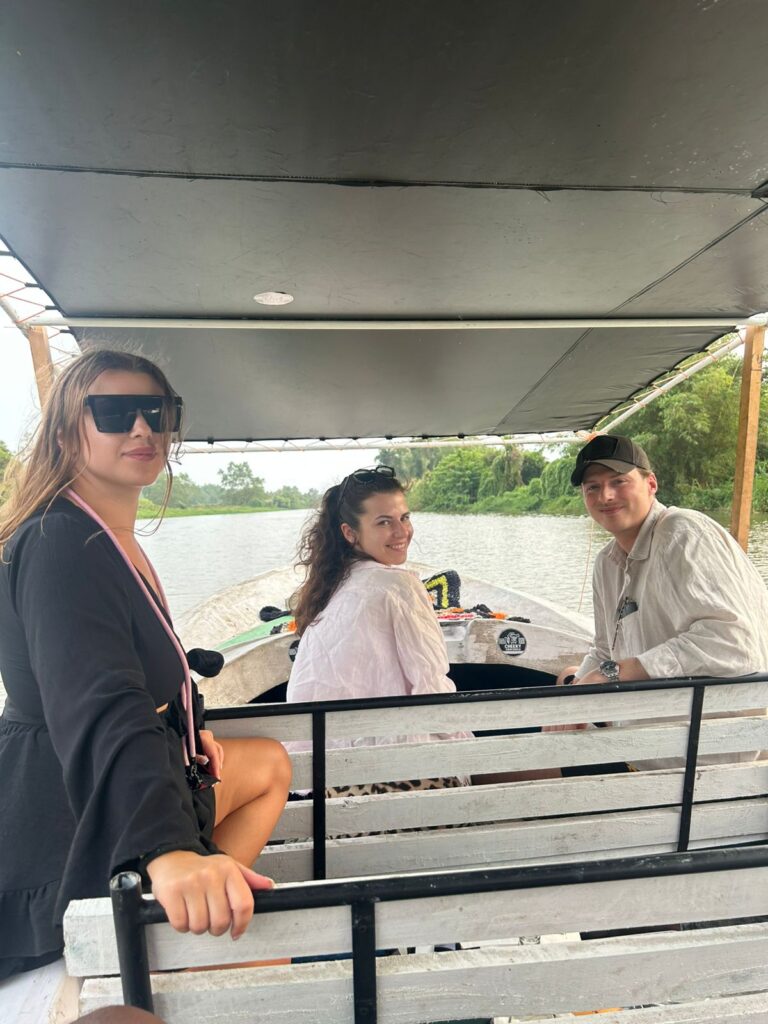
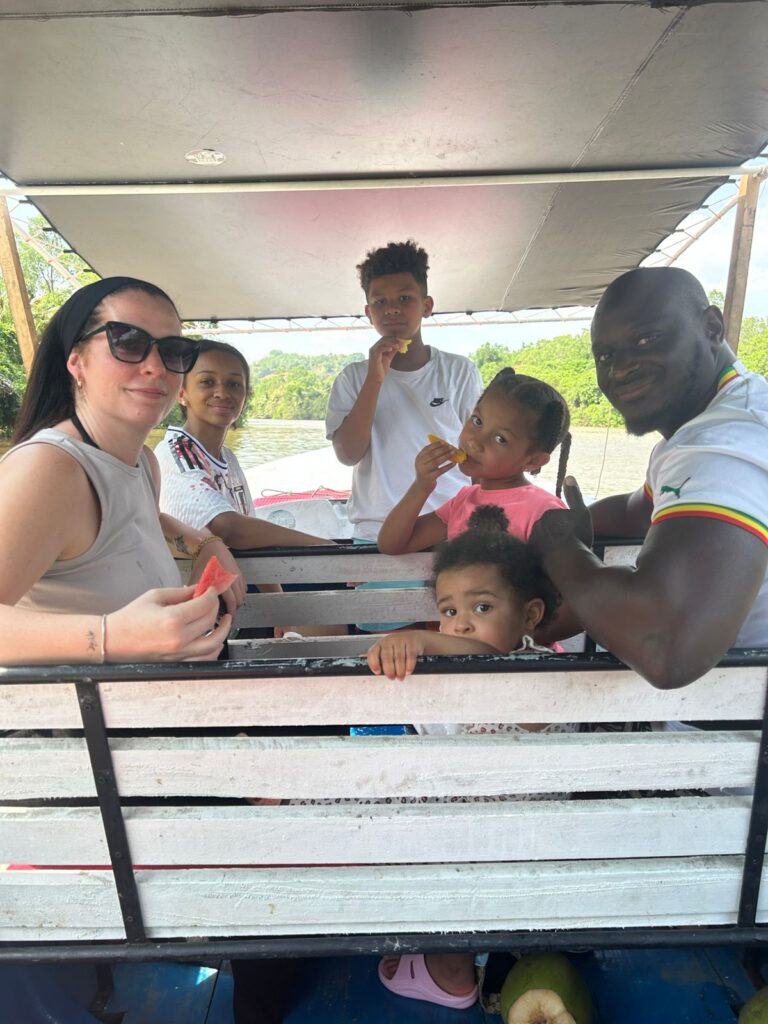
Flowing through the lush southern landscapes of Sri Lanka, the Nilwala River offers one of the most exciting eco-adventures in the country: the unforgettable River Safari experience.

Whether you are a nature lover, wildlife photographer, bird watcher, or adventure seeker, the Nilwala River Safari promises a peaceful yet thrilling journey through mangroves, tropical forests, and crocodile habitats.


🌿 Why Visit the Nilwala River?

The Nilwala River is one of the longest rivers in southern Sri Lanka and is famous for its rich biodiversity and scenic beauty. The calm waters, green mangrove tunnels, and untouched natural surroundings create a truly relaxing atmosphere.

Visitors can experience:

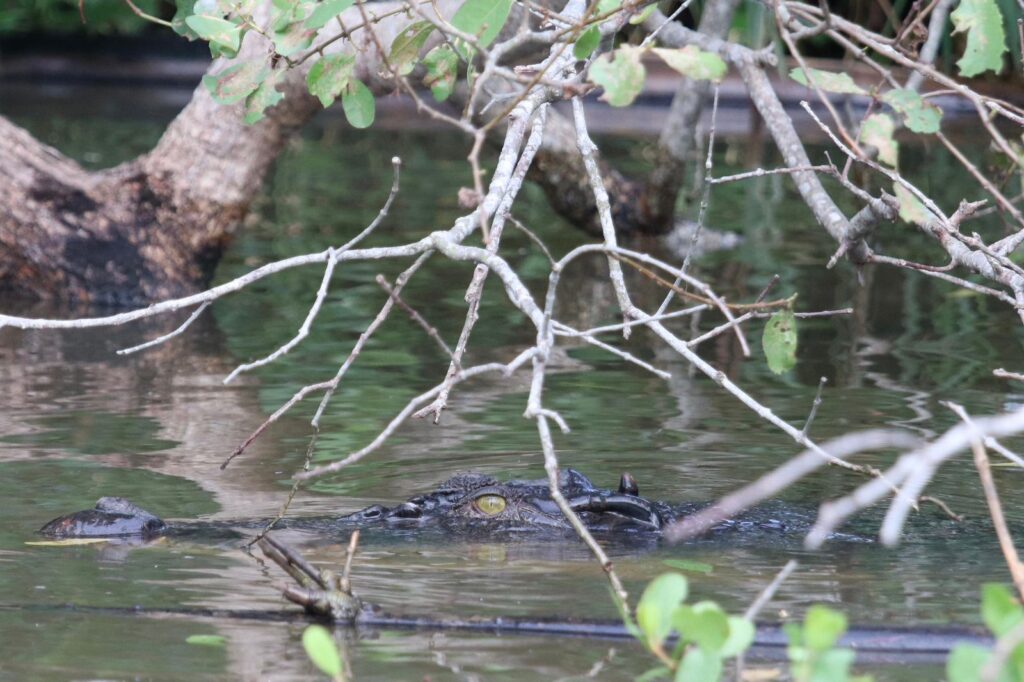
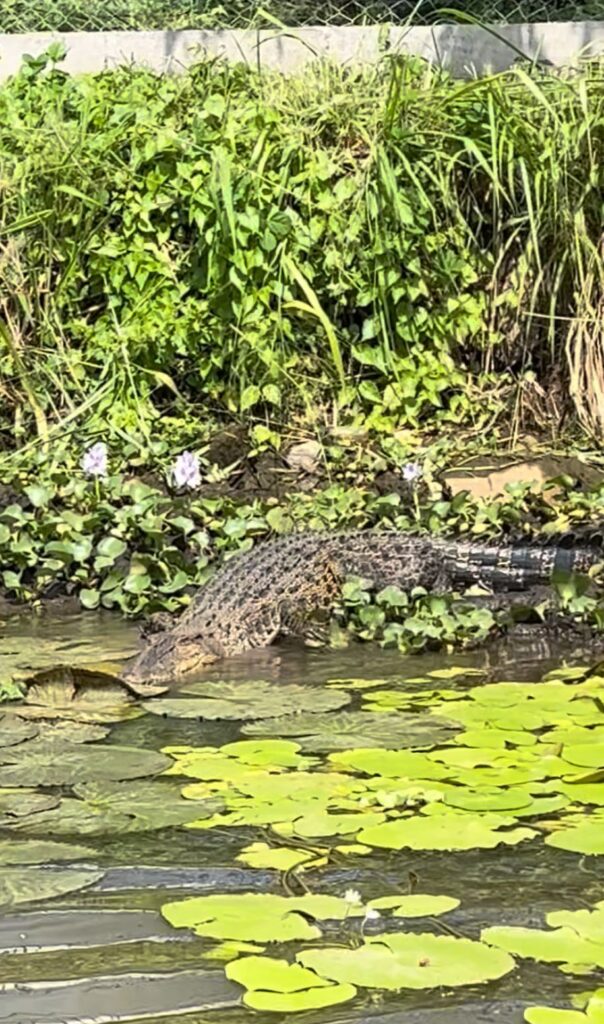
  • 🐊 Crocodile spotting in the wild
  • 🐦 Rare birds and kingfishers
  • 🌿 Beautiful mangrove ecosystems
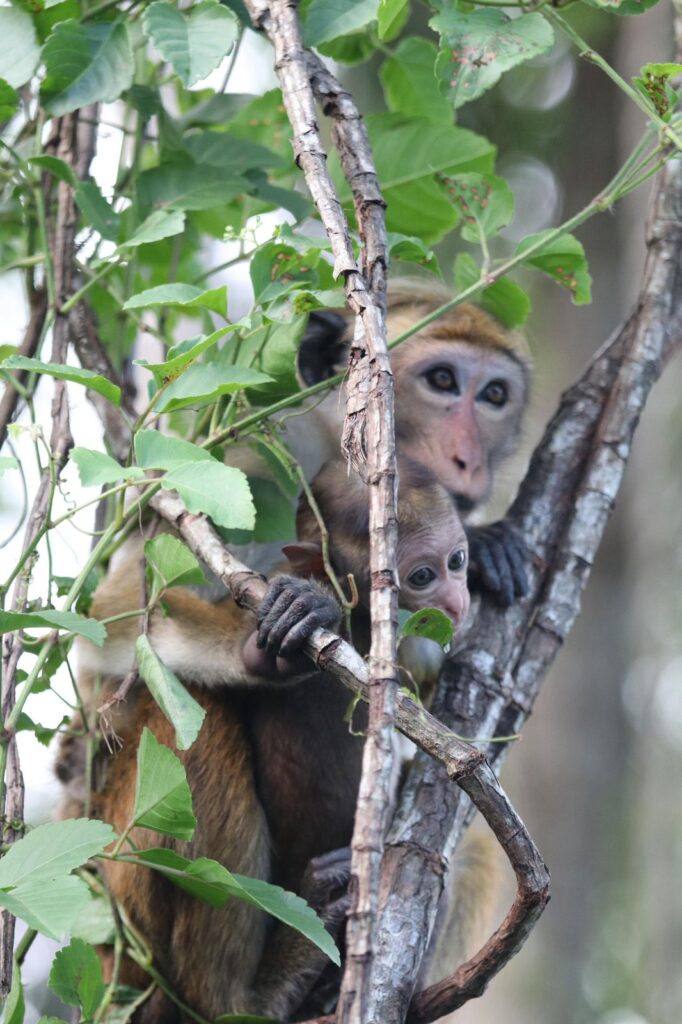
  • 🐒 Monkeys and river wildlife
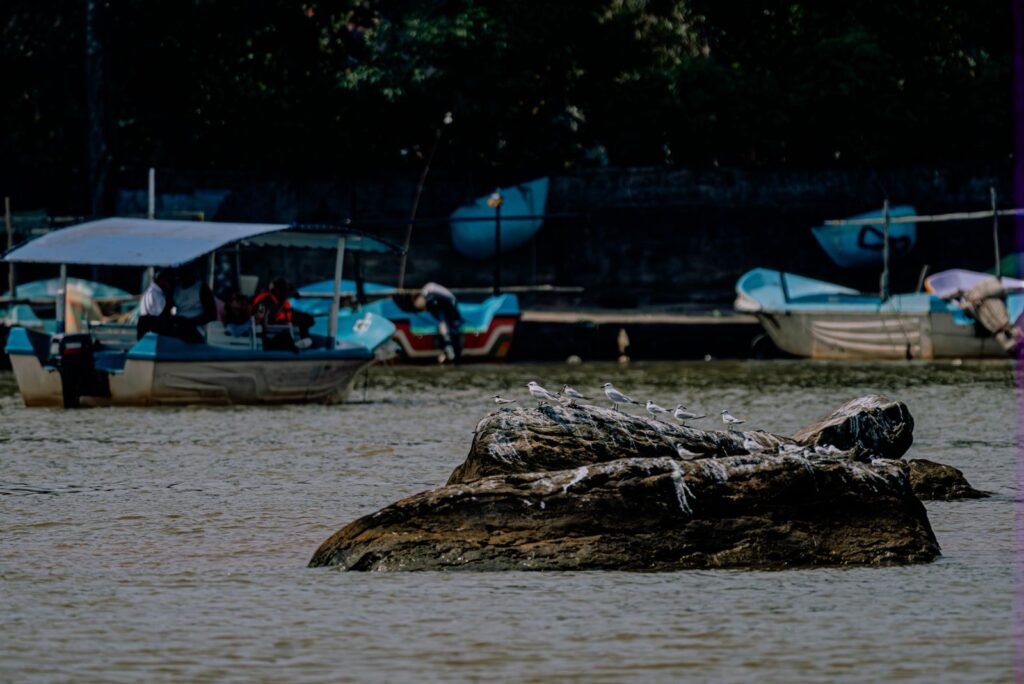
  • 🚤 Peaceful boat rides
  • 📸 Amazing photography opportunities

This safari is one of the best nature experiences near Matara and the southern coast of Sri Lanka.


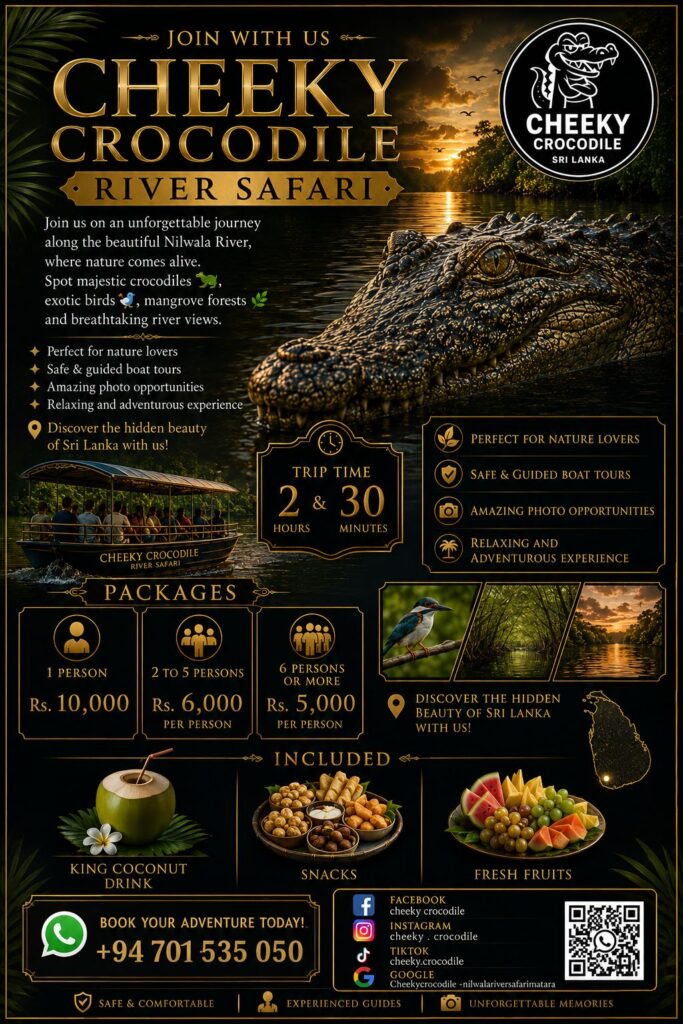
🐊 Cheeky Crocodile River Safari – Your Ultimate River Adventure

If you are looking for a safe, exciting, and memorable river safari experience, Cheeky Crocodile River Safari offers professional guided tours along the Nilwala River.

With experienced local guides and comfortable safari boats, visitors can safely explore the river while learning about Sri Lanka’s fascinating wildlife and ecosystem.

🌟 What Makes Cheeky Crocodile River Safari Special?

✔️ Experienced local safari guides
✔️ Safe and comfortable boat rides
✔️ Close-up crocodile sightings
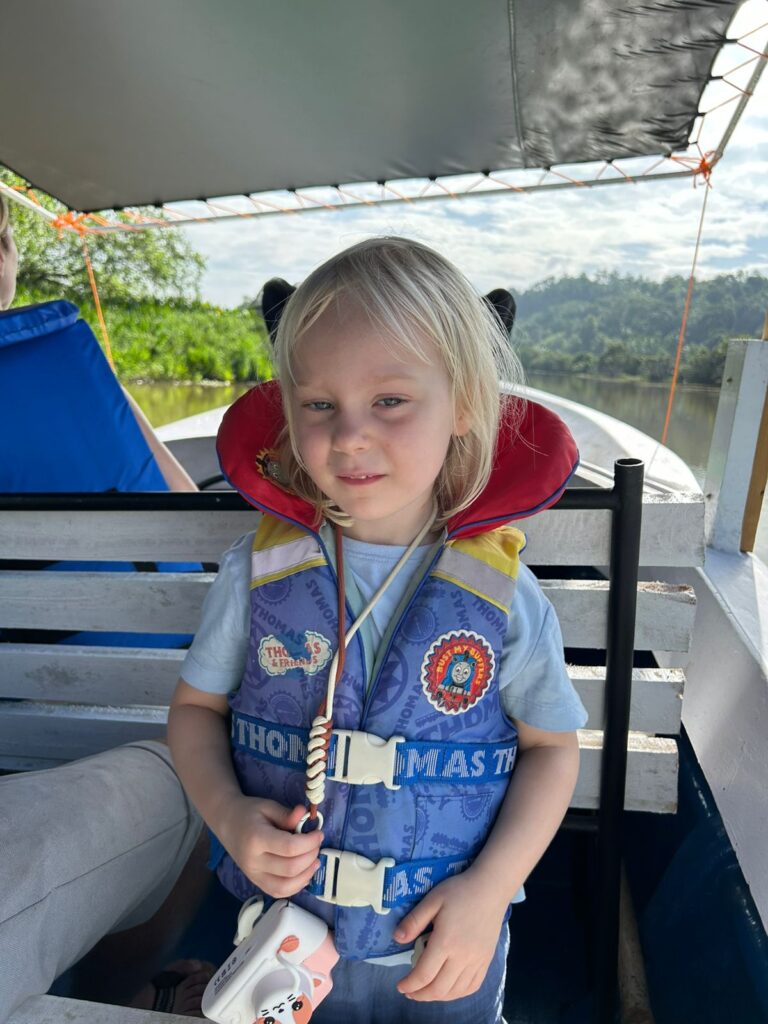
✔️ Family-friendly adventure
✔️ Eco-friendly river exploration
✔️ Ideal for couples, families & groups
✔️ Perfect for photographers & vloggers

Whether you want a relaxing nature ride or an adventurous crocodile safari, Cheeky Crocodile River Safari delivers an unforgettable experience in southern Sri Lanka.


📍 Best Time for a Nilwala River Safari

The best times to enjoy the safari are:

  • 🌅 Early Morning – for bird watching and calm weather
  • 🌇 Evening – for sunset views and crocodile activity

The peaceful environment during these hours makes the experience even more magical.


📸 A Must-Visit Attraction in Southern Sri Lanka

If you are traveling through Matara, Mirissa, Weligama, or Tangalle, adding a Nilwala River Safari to your itinerary is highly recommended.

It’s one of Sri Lanka’s most underrated wildlife adventures and a perfect escape into nature.


🚤 Book Your Adventure Today!

Nilwala River

Experience the beauty of Sri Lanka’s wildlife and nature with Cheeky Crocodile River Safari on the magnificent Nilwala River.

🌿 Adventure
🐊 Wildlife
📸 Nature Photography
🚤 River Exploration

Your unforgettable Sri Lankan river safari starts here!

Sri Lanka Transport

VisitSrilankan.com Introduces Premium Sri Lanka Transport Services 🚗🇱🇰

Explore Sri Lanka with Comfort, Safety & Freedom

Welcome to VisitSrilankan.com Transport Services — your trusted travel partner for reliable, comfortable, and professional transportation across Sri Lanka.

Whether you’re arriving for a tropical holiday, family vacation, surfing adventure, cultural tour, or business trip, we now proudly offer island-wide transport solutions designed to make your journey smooth, stress-free, and unforgettable.

transport

Our Professional Transport Services Include:

  • Airport Pick-Up & Drop-Off Services
  • Private Family Tours
  • Solo Traveler Transport
  • Group Travel Solutions
  • Tourism & Sightseeing Trips
  • Pre-Booked Custom Travel Packages
  • Long Distance Island-Wide Transfers
  • Safe, Professional Driver Service

From Arugambay or Airport to Colombo, Ella, Kandy, Sigiriya, Nuwara Eliya, Mirissa, Yala, Galle, Jaffna, Trincomalee, and beyond — we cover the entire island.


Choose Your Ideal Vehicle

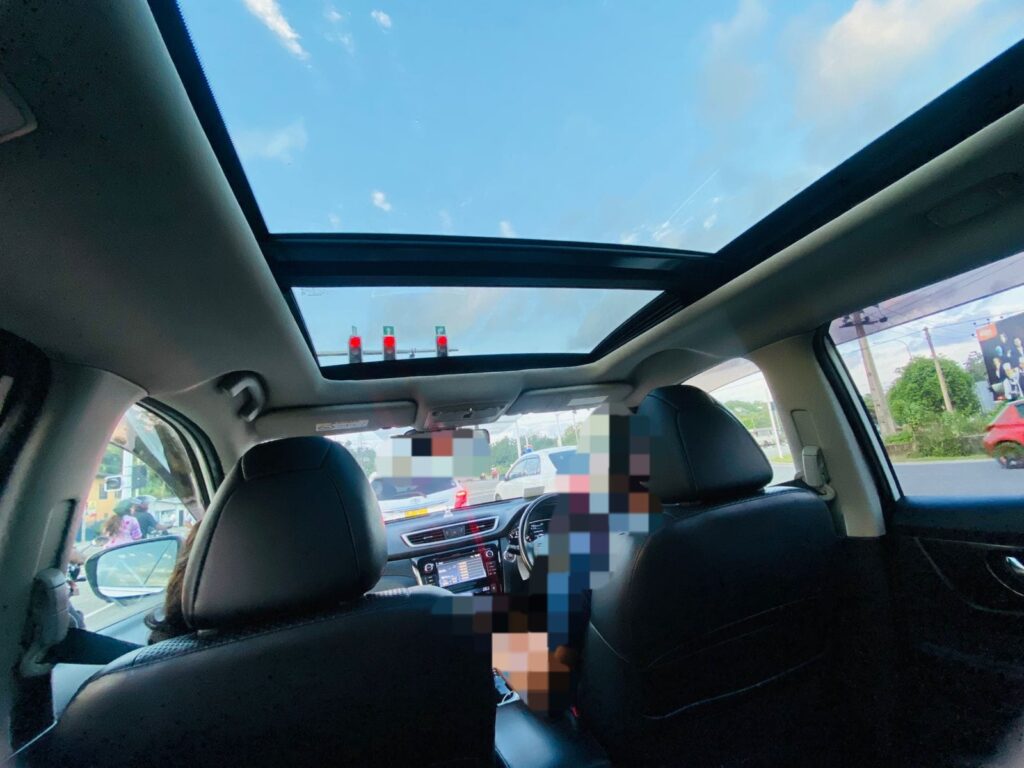
🚙 Nissan X-Trail – Premium Comfort for Family & Group Travel

Travel in style with our spacious Nissan X-Trail, perfect for travelers who want premium comfort and extra room.

Features:

  • Panoramic Sunroof for scenic island drives
  • Spacious interior with large luggage capacity
  • Comfortable seating for family or small groups
  • Powerful air-conditioning
  • Luxury travel experience
  • Professional driver included
  • Ideal for long tours, airport transfers, and sightseeing

Best For:

  • Family vacations
  • Group tours
  • Airport pick-up/drop-off
  • Luxury travel experiences
  • Long-distance travel across Sri Lanka

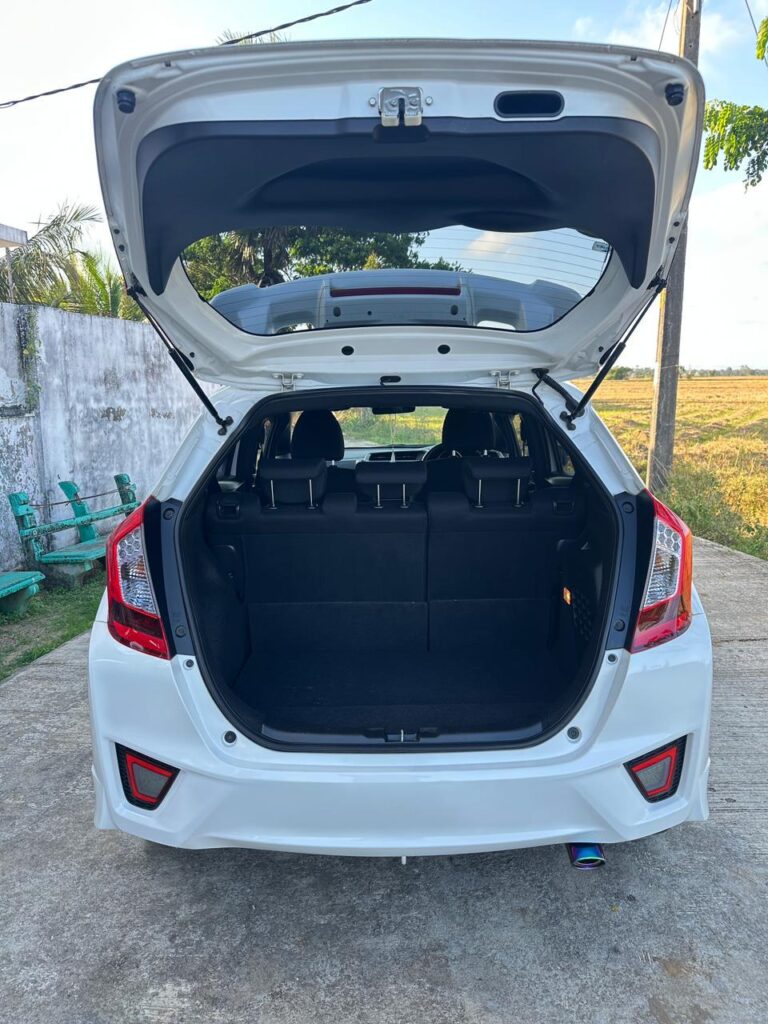
🚗 Honda Fit GP5 – Smart, Full-Option Comfort

Our Honda Fit GP5 offers efficient, stylish, and budget-friendly travel without compromising comfort.

Features:

  • Full option vehicle
  • Modern, comfortable interior
  • Fuel-efficient and eco-friendly
  • Smooth air-conditioned rides
  • Perfect for solo travelers, couples, or small families
  • Reliable and affordable transport solution

Best For:

  • Solo trips
  • Couple getaways
  • City travel
  • Budget-friendly island exploration
  • Daily transport needs

Why Choose VisitSrilankan.com Transport Services?

✔ Reliable & On-Time Service

We prioritize punctuality and professionalism.

✔ Safe & Comfortable Travel

Your safety and convenience are our top priorities.

✔ Island-Wide Coverage

Travel anywhere in Sri Lanka with confidence.

✔ Tourism-Focused Experience

We understand what travelers need for unforgettable journeys.

✔ Affordable & Flexible Packages

Custom solutions tailored to your travel plans.


Base Location: Arugambay

Strategically based in Arugambay, one of Sri Lanka’s top tourism destinations, we provide seamless transportation services throughout the country.


Book Your Ride Today!

Contact Us:

WhatsApp: +94 777 157 114
Call: +94 770 440 256
Website: www.visitsrilankan.com


VisitSrilankan.com Transport Services

Travel More. Worry Less.

Experience Sri Lanka with dependable transport, premium vehicles, and personalized service.

Pre-book now and let us drive your journey!

Verified by MonsterInsights